

Personal Injury Lawyers in Virginia
Dealing with insurance companies, medical bills, and lost income after someone else’s carelessness can be confusing and overwhelming. When you hire the Virginia personal injury attorneys at Rutter Mills, you won’t have to go through it alone. We’ll handle the insurance companies, gather the evidence, and build your case while you focus on recovering.
Rutter Mills represents injured people across Virginia. For three generations, this Hampton Roads family firm has taken on insurance companies from the Oceanfront to the Peninsula shipyards to the rural roads of Suffolk, Franklin, and beyond. Our personal injury lawyers know Virginia’s courts, its insurers, and how to build a case from day one. Call or text 757-777-7777, or schedule a free consultation today.

Watch the full 30-second video
Rutter Mills Has Been Serving Virginia for 65+ Years
C. Arthur Rutter, Jr. founded this firm in Norfolk in 1959. His son, C. Arthur “Brother” Rutter III, joined in 1994 and went on to win the largest wrongful death verdict in Virginia history at that time. Brother’s sons, Carter and Austin, are now attorneys at the firm, representing the third generation of Rutters to practice personal injury law in the state their family has called home for over 65 years.
That much time in one place means we know how Virginia’s contributory negligence rule gets used against injury victims, and how to build a case that accounts for it from day one. It means we know which insurers negotiate in good faith and which ones need to see a courtroom before they take a claim seriously. It means the judges and juries hearing your case likely know our reputation. They know how we do business, and they know we fight to win.
“Virginia isn’t just where we practice. It’s where we’re from.”
C. ARTHUR “BROTHER” RUTTER, III
Managing Partner
Our Offices
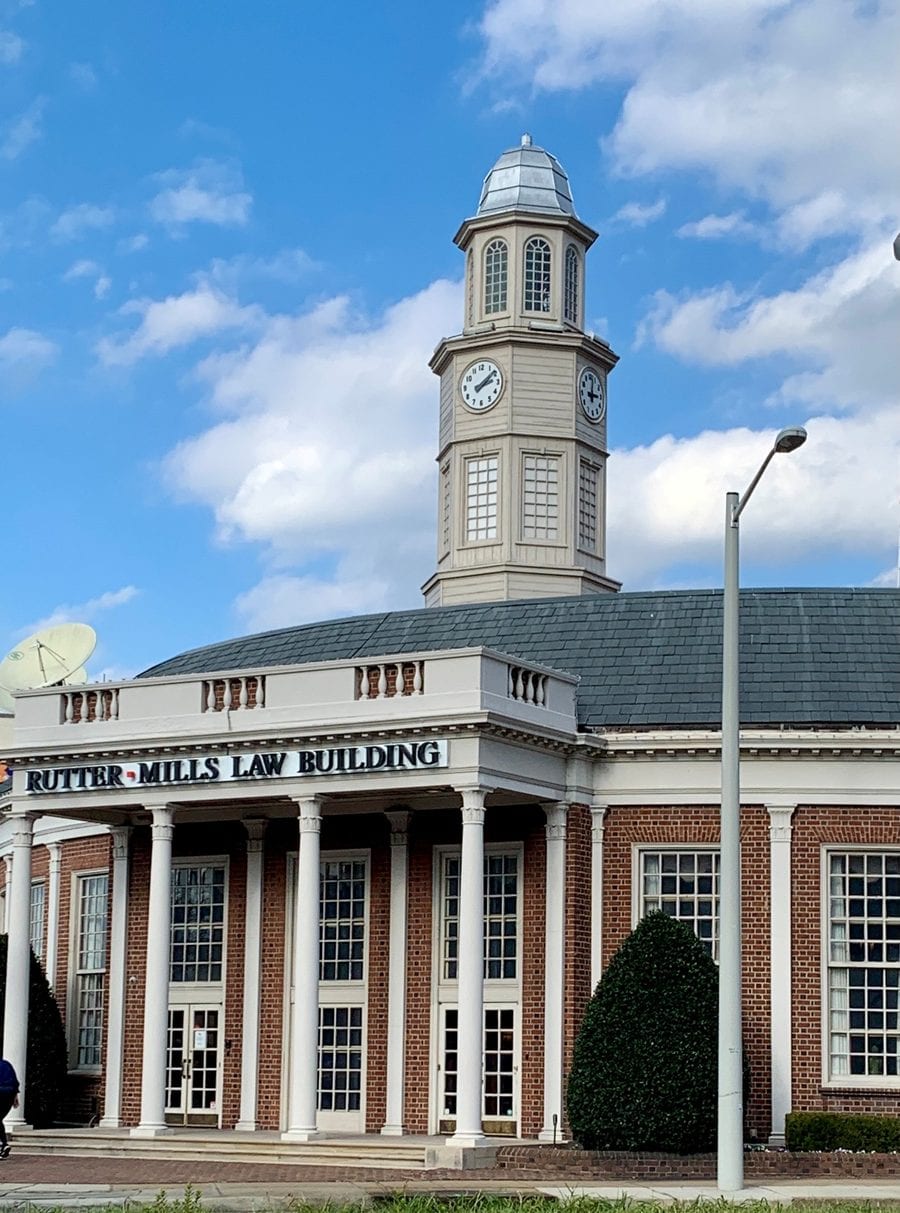
Norfolk — 160 W. Brambleton Ave., Norfolk, VA 23510
In 2003, the firm relocated to this historic former bank building in the Neon District. It’s been our home base for Hampton Roads injury victims ever since.
Virginia Beach — 4287 Holland Rd., Virginia Beach, VA 23452
Virginia Beach is the state’s most populous city. Our attorneys have handled thousands of injury cases here, against nearly every insurer you’re likely to face.
Hampton — 3001 Coliseum Dr., Hampton, VA 23666
From Buckroe Beach and Fort Monroe to the ongoing HRBT expansion along I-64, Hampton and the Peninsula see a mix of tourist traffic and major construction zones. The cases here reflect both.
Chesapeake — 740 Eden Way, Chesapeake, VA 23320
Coming in 2027.
Cities and Communities We Serve in Virginia
From the coast to the mountains and Northern Virginia, we’ve helped thousands of people get the compensation they deserve after an accident. No matter where you live in Virginia, if you’ve been injured, our team is here to help.

How Long Do I Have to File a Personal Injury Claim in Virginia?
In most cases, you have two years from the date of injury to file a personal injury lawsuit in Virginia, under Virginia Code § 8.01-243(A). Some claims follow different deadlines:
- Wrongful death: Two years from the date of death, under § 8.01-244(B).
- Injured minors: Generally, two years from the minor’s 18th birthday, under § 8.01-229(A).
- Medical malpractice involving a minor: Two years from the last act of malpractice, or by the child’s 10th birthday if the child was under 8, under § 8.01-243.1.
- Claims against a city, town, or county: Written notice within six months, under § 15.2-209.
- Claims against the Commonwealth of Virginia: Written notice within one year, under § 8.01-195.6, and a lawsuit filed within the time limits set by § 8.01-195.7.
Missing any of these deadlines typically ends your ability to recover, regardless of how strong your case is.
Our Personal Injury Attorneys in Virginia Get Results
From car accidents to maritime injuries to wrongful death, these are real outcomes from real clients across Tidewater who trusted us to fight back.
-
$8.8 Million Awarded in Wrongful Death Case
-
Newport News Man Wins $5.225 Million in Personal Injury Verdict
-
Car Accident Case Result: $4.85M Settlement After Years of Injuries
-
Rutter Mills Achieves Top Personal Injury Settlement of 2015 in VA
The Practice Areas Rutter Mills Can Help With in Virginia
Since 1959, Rutter Mills has fought for injured Virginians, from Hampton Roads to every part of the Commonwealth.


Car Accidents
Car accidents are among the most common reasons people contact Rutter Mills, and they can range from a minor collision to a life-altering one. Distracted driving, speeding, and impaired driving remain the leading causes on Virginia’s roads. In 2025 alone, the state recorded 22,529 speed-related crashes and 6,152 alcohol-related crashes, according to the Virginia DMV. We handle nearly every type of auto accident claim, from a single-vehicle crash to a multi-vehicle pileup on I-64.
Fault isn’t always limited to the other driver. Depending on the crash and the surrounding circumstances, liability can extend to a manufacturer, a mechanic or repair shop, a government entity, or even an employer.
Around the Oceanfront, congestion and pedestrian traffic peak in summer, while military shift changes at NAS Oceana, Little Creek, and Dam Neck add predictable rush patterns locals already know to avoid.
If you’ve been in a car accident anywhere in Virginia, call our injury lawyers today at 757-777-7777 to schedule a free consultation.
- Distracted Driving Accidents
- Drowsy Driving Accidents
- Drunk Driving Accidents
- Texting While Driving Accidents
- Wrong Way Driving Accidents
- Hit & Run Car Accidents
- Head-On Collisions
- High-Speed Collisions
- Rear-End Collisions
- Side Impact Collisions
- Vehicle Rollovers
- Lyft Car Accidents
- Uber Car Accidents
- Bicycle Accidents
- Military and Active Duty Accidents
- Fatal Car Accidents
- Uninsured Motorists
Pedestrian Accidents
Pedestrians and cyclists have almost no protection in a crash, and the consequences reflect that. Virginia recorded 1,612 pedestrian crashes in 2025, resulting in 138 deaths, a number that actually rose even as overall crashes across the state went down. Bicycle crashes added another 627 crashes and 15 deaths that year. E-scooters like Lime present many of the same risks, such as low visibility, no protective barrier, and close proximity to vehicle traffic. Drivers who fail to yield, run red lights, or simply aren’t paying attention are frequently at fault when someone is struck while walking, biking, or riding a scooter.
Shore Drive is a particular concern, a scenic route that also carries heavy foot traffic near the bars and restaurants around Chic’s Beach, often at night and at high speeds.
Other Serious Injuries
Some injuries heal in a few weeks. Others, like a spinal cord injury, a severe burn, or a traumatic brain injury, can change how someone lives and works for the rest of their life. Whatever caused your injury, our team investigates its full extent, not just the initial diagnosis, so nothing gets left out of your claim.
Motorcycle Accidents
Riders face risks other drivers simply don’t, since a motorcycle offers little protection in a collision and can be harder for other drivers to see. That imbalance shows up in the numbers: motorcycle crashes killed 101 riders across Virginia in 2025, even though investigators found no improper action by the rider in more than a third of those crashes.
Wrongful Death
A death caused by another person’s negligence or recklessness leaves surviving family members to pursue compensation for their loss. Under Virginia Code § 8.01-50, a wrongful death claim must be brought by the personal representative of the deceased, generally within two years of the death. Compensation can include funeral expenses, lost income, and loss of the deceased’s care, companionship, and guidance. We handle the legal work so your family can focus on grieving, not paperwork.
Truck Accidents
A collision with a large truck or tractor-trailer is rarely a fair fight, and the resulting injuries are often more severe than a typical car accident. These cases can also be more complicated, since trucking companies, cargo loaders, and equipment manufacturers may all share liability. Virginia recorded 2,670 large truck crashes in 2025, including 45 that were fatal, according to the Virginia DMV.
We routinely investigate beyond the driver. Depending on the crash, liability can extend to the trucking company (for hiring, training, or maintenance failures), the company that loaded the cargo (if uneven weight distribution caused the crash), the parts manufacturer (if defective brakes, tires, or equipment were involved), or a government entity (if a construction zone or road defect contributed).

Premises Liability
Property owners and the businesses on their property have a duty to keep people reasonably safe, from repairing a broken stair to properly staffing a daycare or nursing home. In Virginia, these cases often come down to proving the owner knew, or should have known, about the danger and failed to address it. Because most of that evidence is in the owner’s hands, our team moves quickly to secure maintenance logs, incident reports, staffing records, and surveillance footage before it’s lost.
Maritime Law
Injuries that happen on the water, whether you’re working aboard a vessel or a passenger on a cruise ship, aren’t governed by ordinary personal injury law. These cases fall under federal maritime and admiralty law, including the Jones Act for injured seamen, which can involve different rules, different deadlines, and different courts than a typical Virginia injury claim. Hampton Roads’ busy port and shipping industry mean maritime injuries are a regular part of our caseload.
Workers’ Compensation
If you’re injured on the job, Virginia’s workers’ compensation system may cover your medical treatment and a portion of your lost wages, regardless of who was at fault for the accident. Longshore and maritime workers are often covered under a separate federal law, the Longshore and Harbor Workers’ Compensation Act, rather than Virginia’s standard workers’ comp system, which can mean different benefits and a different claims process entirely. Rutter Mills helps injured workers figure out which system actually applies to them, and we make sure they aren’t shortchanged by a claim filed under the wrong one.
Social Security Disability
An injury severe enough to prevent you from returning to work may qualify you for federal Social Security Disability benefits. The application and appeals process can be lengthy and technical, and many first-time applications are denied for reasons that have nothing to do with the merits of the underlying disability.
Veterans Disability
Veterans exposed to hazardous conditions during their service, including Agent Orange, burn pits, or combat-related trauma, may be entitled to federal disability benefits through the VA, separate from any personal injury claim. These claims can be complex, and a denial doesn’t necessarily mean the claim was invalid.
Medical Malpractice
When a doctor, nurse, or hospital fails to meet the standard of care, the harm can be severe and permanent. Virginia does limit what a patient can recover, though. Under Virginia Code § 8.01-581.15, the cap on total damages depends on when the malpractice occurred. For care provided between July 1, 2026, and June 30, 2027, the cap is $2.75 million. The cap rises by $50,000 each July 1 and reaches $3 million for malpractice occurring on or after July 1, 2031.

Defective Products
A poorly designed or manufactured product can cause serious injury long before anyone realizes something is wrong. Under strict product liability, a company can be held responsible if the product was unreasonably dangerous when it left the manufacturer, whether or not the injured person can prove the company was careless.
- Firefighter Foam Lawsuit
- Hair Relaxer Lawsuit
- NEC Baby Formula Lawsuit
- Philips CPAP Machine Lawsuit
- Roundup Lawsuit
Dangerous Drugs
Some medications carry risks that manufacturers know about and fail to disclose to patients or doctors. When a drug is later recalled or found to have serious, undisclosed side effects, the people harmed by it may have a claim even without evidence of a manufacturing defect.
- Depo Provera Lawsuit
- Ozempic Lawsuit
- Xeljanz Lawsuit
- Zantac Lawsuit
- Truvada Lawsuit
- Tylenol Lawsuit




What Compensation Is Available in Virginia?
In Virginia, injured people can pursue economic damages for measurable losses like medical bills and lost income, and non-economic damages for harder-to-quantify losses like pain and suffering. Punitive damages may also apply in cases involving especially reckless conduct.
Economic Damages
Economic damages cover the financial losses tied directly to your injury:
- Medical expenses (both past and future)
- Lost wages during recovery
- Any reduction in your ability to earn income going forward
- Property damage to your vehicle or other belongings
These are calculated using medical records, wage statements, and, in more serious cases, testimony from vocational or medical experts.
Non-Economic Damages
Non-economic damages account for the parts of an injury that don’t come with a receipt, such as:
- Physical pain
- Emotional distress
- Permanent disability
- The loss of activities and relationships an injury takes away
Virginia does not cap these damages in most personal injury cases, so the amount available depends on the facts of your case rather than a statutory ceiling.
Punitive Damages
In cases involving willful or wanton conduct, such as drunk driving and hit-and-run accidents, punitive damages may also apply. Virginia caps punitive damages at a combined total of $350,000 per case under Virginia Code § 8.01-38.1, regardless of how many defendants are found liable.
Every case is different, and the compensation available depends on the severity of the injury, the strength of the evidence, and the parties involved.
What Affects the Value of Your Claim in Virginia?
No two cases are worth the same amount. The main factors that shape a settlement or verdict in Virginia include:
- Hiring the right personal injury lawyer: An experienced lawyer who has handled many Virginia injury cases knows what similar claims have recovered and can put a credible value on losses like pain, emotional distress, and permanent disability, which are often the hardest part of a claim to calculate.
- Severity and permanence of the injury: More serious, longer-lasting harm generally means higher damages.
- Available insurance coverage: Your recovery is often limited by the at-fault party’s policy limits, which is why underinsured motorist coverage matters.
- Strength of the evidence: Clear proof of fault and damages leads to stronger settlement offers and better outcomes at trial.
- Contributory negligence: Under Virginia’s contributory negligence rule, any fault attributed to you, even a small share, can eliminate your recovery entirely.
- Number of liable parties: When more than one party shares responsibility, there may be more than one insurance policy to pursue.
An experienced Virginia personal injury lawyer from Rutter Mills can walk you through how these factors apply to your specific case during a free consultation.
How Negligence Works in a Virginia Injury Claim
Many personal injury cases in Virginia come down to proving the other party failed to act with reasonable care, and that failure caused your injury. To recover compensation, four things generally have to be true:
- Duty of care: The other party owes you a duty to act reasonably, such as a driver’s duty to follow traffic laws or a property owner’s duty to maintain safe premises.
- Breach: They failed to meet that duty, through action or inaction.
- Causation: Their breach directly caused your injury, not some other factor.
- Damages: You suffered a real, provable loss: medical bills, lost income, pain, etc.
Proving all four takes evidence, such as police reports, medical records, witness statements, and often expert testimony. It also means the other side will look for any gap they can use, which is where Virginia’s contributory negligence rule becomes critical.
Understanding Virginia’s Contributory Negligence Rule
Virginia is one of only four states, along with Alabama, Maryland, and North Carolina, that follow pure contributory negligence. Washington, D.C., also follows the rule, with limited exceptions. Under contributory negligence, if you’re found even 1% at fault for the accident that injured you, you can be barred from recovering anything, no matter how clearly the other party was at fault.
Learn more about how contributory negligence works in Virginia.
What If the Police Report Blames Me?
A police report is not the final word on fault, but insurance companies often treat it that way, and in a state this unforgiving on fault, that gap matters.
Police officers write reports based on what’s available in the moments after a crash, often before skid marks are measured, camera footage is pulled, or witnesses are found. Our team investigates independently, and in many cases, that additional evidence changes the picture the initial report painted. If you’ve been told the accident was your fault, that’s a reason to call us, not a reason to assume you have no case.
Virginia Personal Injury Data
Falls, car crashes, and traumatic brain injuries account for the largest share of serious accidental injury in Virginia, according to the Virginia Department of Health, which tracks injury hospitalizations and injury-related deaths statewide, and the Virginia Department of Motor Vehicles, which tracks traffic crash data.
Motor Vehicle Crashes Remain a Leading Cause of Injury Death
In 2025, Virginia recorded 115,858 traffic crashes, resulting in 825 fatalities and more than 74,000 injuries, according to the Virginia Department of Motor Vehicles. Speeding was a factor in more than 40% of all traffic fatalities, and alcohol-impaired driving contributed to nearly a third.
Traumatic Brain Injury Is a Common and Serious Outcome
Traumatic brain injuries can result from a fall, a car crash, or a workplace accident, among other causes. Hospitalizations for traumatic brain injury in Virginia reached 5,870 in 2024, and they accounted for 1,831 deaths that year, more than any other injury category tracked by the state.
Falls Are the Leading Cause of Injury Hospitalization in Virginia
Falls send more Virginians to the hospital each year than any other type of unintentional injury. Hospitalizations for falls rose from 19,096 in 2022 to 21,204 in 2024, an increase of more than 11% in two years. Fall-related deaths in Virginia totaled 1,016 in 2024.
Workplace Injuries Remain a Serious Risk in Virginia
Virginia’s private employers reported 51,000 workplace injury and illness cases in 2024, according to the Bureau of Labor Statistics. Workplace accidents are a leading source of the personal injury and workers’ compensation claims Rutter Mills handles across Hampton Roads’ shipyards, ports, and construction sites.
What Happens After You Contact Rutter Mills
Once you call Rutter Mills, your case moves through four stages: a free consultation, investigation, insurance negotiation, and, if needed, trial.
You Get a Free Consultation
Your first conversation with us costs nothing and comes with no obligation. It’s a chance for you to ask questions, learn about the legal process, and for us to get a clear picture of what happened. It helps to bring:
- The accident or police report
- Medical records and bills
- Wage records
- Applicable insurance policies
- Photos of the scene and your injuries
- Contact information of any witnesses
See more on how to prepare for your personal injury legal consultation
We Investigate
Our team gathers police reports, medical records, scene photos and video, and witness statements while the evidence is still fresh. In Virginia, where a single misstep on fault can end a claim, this early work is crucial.
We Negotiate With the Insurance Company
Once we take your case, you can stop talking to adjusters. We manage all communication on your behalf, including any recorded statements, so nothing you say gets used to shift blame onto you. We calculate your medical costs, lost income, and the full scope of how the injury has affected your life, then present the insurance company with a demand backed by evidence.
We’re Ready for Trial
Most personal injury claims settle before trial. When an insurance company won’t offer a fair settlement, we file suit and prepare the case for court. Insurance companies know Rutter Mills actually goes to trial, and that reputation shapes the offers they make to our clients.
Every case moves at its own pace, and there’s no set timeline that applies to all of them. Contact Rutter Mills to find out what the process looks like for your situation.

Watch our 30-second video
FAQs About Virginia Personal Injury Law
Virginia’s statute of limitations gives you two years from the date of injury to file a personal injury claim, under Virginia Code § 8.01-243. If the injury results in death, the deadline is also two years, but it runs from the date of death rather than the date of injury, under Virginia Code § 8.01-244. If the injured person is a minor, the two-year clock doesn’t start until they turn 18, under Virginia Code § 8.01-229. Claims involving a city, town, or county carry a much shorter deadline: written notice is required within six months, under Virginia Code § 15.2-209. Claims against the Commonwealth of Virginia itself require written notice within one year, under Virginia Code § 8.01-195.6. Missing any of these deadlines typically ends your ability to recover, regardless of how strong your case is.
Virginia’s government entities have broad legal immunity from lawsuits, a doctrine called sovereign immunity. The Commonwealth has waived part of that immunity under the Virginia Tort Claims Act, but claims against it are capped at $100,000 per claim and require written notice within one year, as noted above.
Cities and towns are generally immune for governmental functions like police and fire service, but not for proprietary functions like utility operations. Counties carry the same broad immunity as the Commonwealth itself. These cases are technical and fact-specific, and missing a step can end a claim before it starts. That’s why an early call matters more here than in most other case types.
You owe nothing upfront. Rutter Mills works on contingency, which means we only get paid if we recover for you. Our team collects a percentage of the amount we recover for your case. The percentage is explained clearly before you sign anything. If we don’t win, you don’t pay.
Seek medical attention immediately, even if you feel fine. Call 911 and document the scene. Speak with a lawyer and get legal advice before giving a recorded statement to any insurance company, including your own. Contact Rutter Mills as soon as you’re able. The evidence that wins cases disappears quickly.
We handle car accidents, motorcycle accidents, truck accidents, daycare injuries, pedestrian accidents, hit-and-runs, wrongful death claims, maritime injuries, workers’ compensation claims, dangerous drug claims, defective product claims, and more.
If you’re not sure whether your situation qualifies, contact us. The consultation is free, and there’s no obligation to talk to our team and learn what your options are.
Yes. Some personal injury firms in Virginia settle every case because litigation is expensive and many firms aren’t built for it. Rutter Mills is. Insurance companies know which firms will walk into a courtroom and which ones won’t, and that reputation affects every offer they make before trial is ever discussed.
Virginia Reviews


Over 1,500 5-Star Reviews

I am quite impressed with the outcome of my case, considering the volume of clients this office represents. This law firm treated me with respect and dignity, which is often absent these days. Attorney Daniel deLalla listened to my concerns and delivered. Rachel Medina, I appreciate your caring and patient demeanor. I recommend this office for ANY legal needs. This office has proven their professionalism and expertise is second to none in the entire Hampton Roads area. As always be patient and trust the process as you will be pleased with the end result.
They the best in the world
They work hard and always ready to answer any questions
Andy & Kathy's guidance throughout this process was paramount to the success & outcome of my case and I thank you, sincerely #dynamicduo
Andi and the Rutter Mills Team were extremely attentive, responsive and informative through the entire process. I feel like my case got the attention and the results it deserved. 100% would recommend Andi and Rutter Mills!
Everyone here was very professional and personable. I felt my case was important to everyone, everyone took the time to listen to me, and I was heard.


Injured in Virginia? Let’s Talk.
Free consultation. No upfront cost. No fee unless we win. If you or someone in your family was hurt anywhere in the Hampton Roads area, this is where you start.
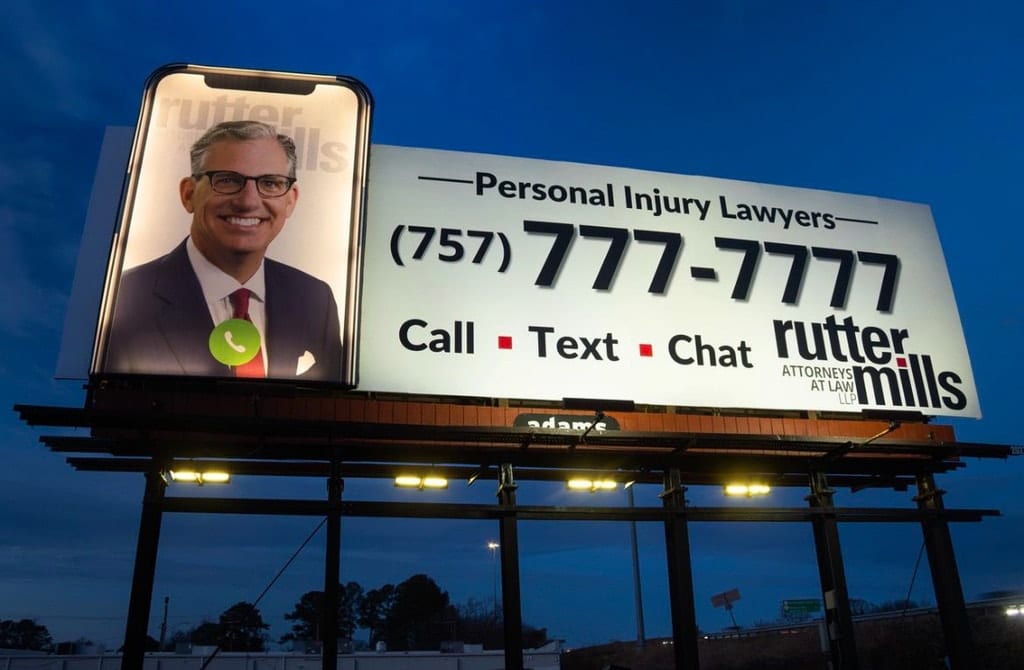
Wherever You Are in Hampton Roads, There’s a Rutter Mills Office Near You.
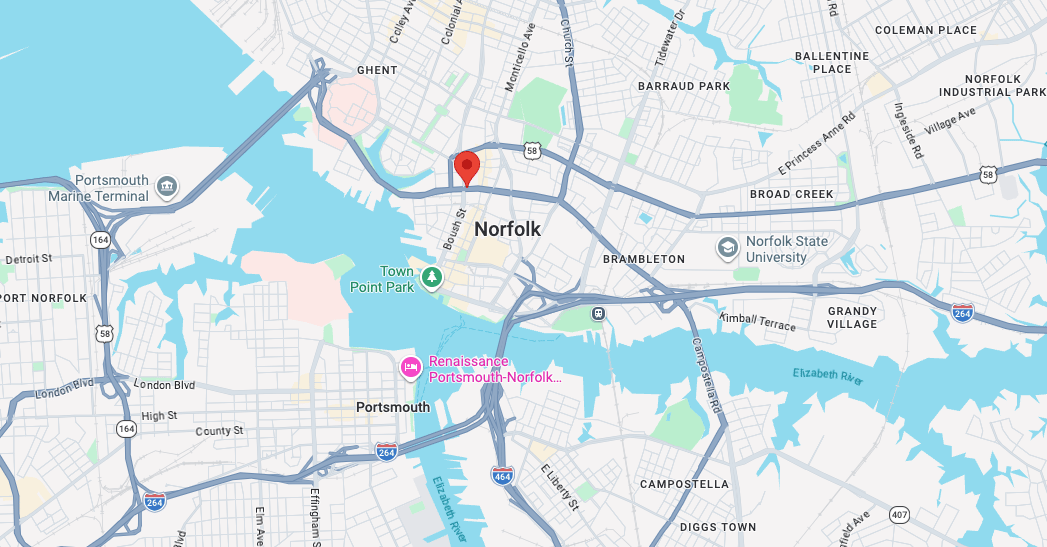
Find us at: 160 W Brambleton Ave. Norfolk, VA 23510
Call or text: 757-777-7777
Email: [email protected]
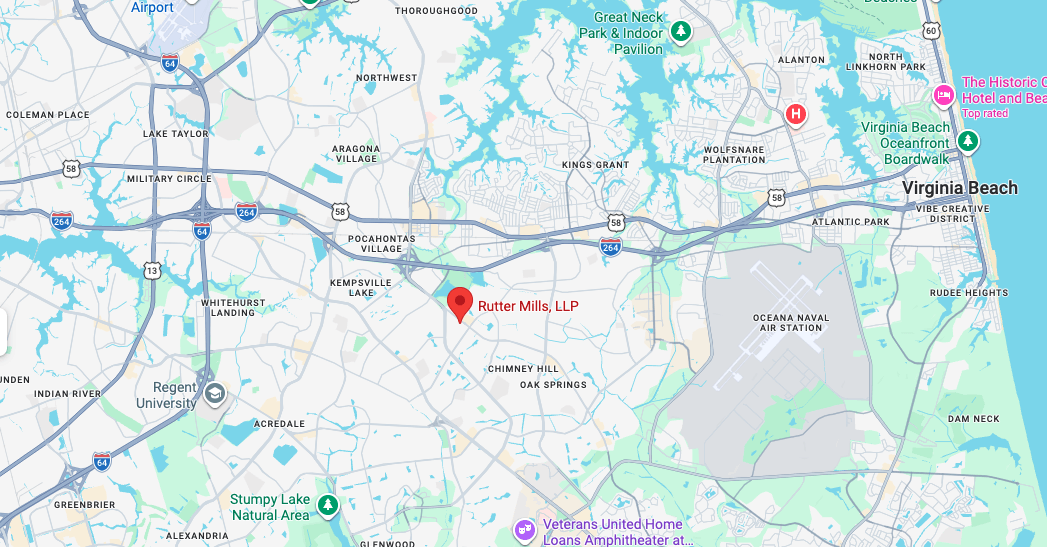
Find us at: 4287 Holland Rd. Virginia Beach, VA 23452
Call or text: 757-777-7777
Email: [email protected]
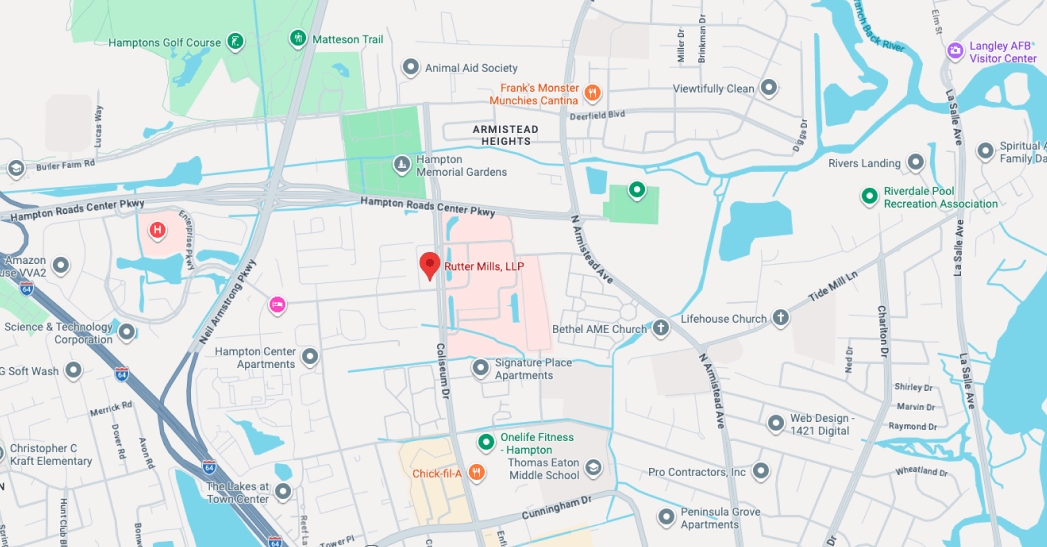
Find us at: 3001 Coliseum Dr, Hampton, VA 23666, United States
Call or text: 757-777-7777
Email: [email protected]
Coming in 2027
Find us at: 740 Eden Way, Chesapeake, VA 23320
Call or text: 757-777-7777
Email: [email protected]