

North Carolina Wrongful Death Lawyers
Losing someone because of another person’s carelessness turns your world upside down. You’re grieving, and at the same time you’re facing questions about the estate, insurance companies, and deadlines you may never have heard of. Our job is to take on the hard parts so your family can lean on each other.
Call 757-777-7777Key Things To Know
- You generally have two years from the date of death to file a wrongful death lawsuit in North Carolina, and claims against the State, the United States, or a medical provider follow their own rules.
- Under state law, the estate’s personal representative brings the claim. The money goes to your family, not your loved one’s creditors, except for burial costs and limited medical costs.
- Insurance defense attorneys will often try to blame your loved one. If they do, North Carolina law requires they prove that in a courtroom. Your family needs an experienced wrongful death attorney on their side after such a traumatic loss.
What is a wrongful death claim in North Carolina?
A wrongful death claim is a lawsuit your family can bring when someone’s carelessness or wrongdoing causes your loved one’s death. It asks for money to replace the financial portion of what your family has lost.
The basic test is simple. If your loved one could have sued over the injury had they lived, your family can bring a wrongful death claim (G.S. 28A-18-2).
One person files the claim for the family: that person becomes the personal representative of your loved one’s estate. The clerk of the superior court appoints this person. Your loved one’s other legal claims don’t disappear when they die, either. Under G.S. 28A-18-1, the personal representative can still pursue most claims your loved one had before death.
Who can file a wrongful death lawsuit in North Carolina?
Under G.S. 28A-18-2, only the personal representative of your loved one’s estate can file. According to the NC Judicial Branch estates guide, in each county the elected clerk of superior court acts as the probate judge and appoints that person. Under G.S. 28A-4-1(b), if there is no will, or the person a will names to handle the estate (the executor) can’t serve, the clerk appoints an administrator in this order: the surviving spouse, then anyone who inherits under a will, then any heir (a relative entitled to inherit under state law). The clerk can change that order if the estate’s best interests require it.
Who Cannot Serve as Executor
Under G.S. 28A-4-2, a person cannot serve if, among other grounds, they are under 18, have been declared incompetent by a court and still are, or have lost their rights under Chapter 31A, such as a parent who abandoned the child or a person who killed your loved one.
What to Bring to the Clerk
The NC Judicial Branch estates guide tells applicants to bring the will if there is one, a certified death certificate, an application and preliminary inventory of your loved one’s property, and a filing fee. The application form, AOC-E-202, asks whether there is a potential wrongful death claim.
We help your family gather the documents the clerk needs, so the clerk can appoint a representative as quickly as the county allows.
Who receives the money from a wrongful death case?
In a North Carolina wrongful death case, compensation is paid directly to surviving family members under G.S. 28A-18-2 rather than becoming part of your loved one’s general assets. Before the remaining funds are distributed to the family, the recovery is used to cover the costs of pursuing the legal claim, attorney fees, burial expenses, and limited medical bills related to the fatal injury. Our team handles the wrongful death claim from start to finish to pursue the maximum compensation available for your family.
Some Settlements Need a Judge’s Approval
Under G.S. 28A-13-3(a)(23), unless every family member entitled to the money is a competent adult who agrees in writing, a judge must approve a settlement, even if no lawsuit was filed. For a claim against the State before the Industrial Commission, the Commission approves it instead.
What compensation can your family recover?
G.S. 28A-18-2(b) lets your family seek financial compensation for hospital and medical expenses from the fatal injury, reasonable funeral expenses, your loved one’s pain and suffering, and the present money value of your loved one to the family members entitled to receive the money. That value includes the income your loved one could reasonably have been expected to earn (lost income); their services, protection, care, and assistance; and their companionship, comfort, guidance, and advice, often called loss of companionship.
When the Conduct Was Malicious or Reckless
Your family can also seek punitive damages, extra money meant to punish especially bad conduct. You have to show the death was caused by malice (personal ill will) or by willful or wanton conduct. G.S. 1D-5(7) defines willful or wanton conduct as knowingly ignoring others’ safety when the wrongdoer knows, or should know, that someone is likely to get hurt. It is a higher bar than gross negligence.
You must prove it by clear and convincing evidence, which means the jury must be firmly convinced, not just persuaded that it is more likely true than not. A company or person can’t be made to pay punitive damages just because they are legally responsible for someone else, such as an employer for an employee.
The Limit
Under G.S. 1D-25(b), that extra amount is limited to three times the compensation for the loss or $250,000, whichever is greater. For example, if the compensation is $50,000, the limit is $250,000. If it is $200,000, the limit is $600,000. Under G.S. 1D-26, the limit does not apply when the wrongdoer’s driving would support a drunk or impaired driving conviction.
We work with forensic experts to show the income your loved one would have kept earning, and with mental health experts who can speak to what your family has been through.
Ready to Find Out What Your Case Is Worth?
It all starts with a phone call or text message. Free consultation, no commitment, no fee unless we win.
Call 757-777-7777
How does contributory negligence affect a wrongful death claim in North Carolina?
North Carolina’s contributory negligence rule can bar a wrongful death claim if your loved one’s own carelessness helped cause the death. But under G.S. 1-139, the insurance company has to prove it, a jury decides it except in rare cases, such as when the danger was open and obvious, and exceptions can let your family’s claim go forward. In a wrongful death case, the conduct that counts is your loved one’s own, and a finding of contributory negligence can bar the claim. Being told your loved one was to blame, or believing they were partly at fault, does not by itself end your family’s case.
Our attorneys often prove that people who were blamed for a crash, including loved ones who died, were not at fault, or were less at fault than the insurance company claimed. We look into what happened ourselves, because the other driver’s account and the insurance company’s view don’t decide who was at fault. Read about a Virginia Beach case where an insurance company blamed an injured passenger.
Defense Counsel Must Prove It
Whoever raises the defense has the burden of proving it. In a personal injury case, the state Supreme Court said that, except in rare cases, a jury decides whether a person’s conduct was contributory negligence, though a judge can decide it when the condition that caused the harm was open and obvious.
Last Clear Chance
Under the last clear chance rule, carelessness does not bar the claim if the at-fault party had the time and opportunity to avoid the harm anyway. The state Court of Appeals has listed four things your family has to prove when a motor vehicle strikes a careless person: the person’s carelessness put them in danger they could not escape with reasonable care; the driver knew, or with reasonable care could have discovered, the danger and that the person could not escape it; the driver had the time and means to avoid the harm with reasonable care; and the driver carelessly failed to use them. When the evidence, read in your family’s favor, supports a reasonable inference of each of these, the jury decides.
Gross Negligence, or Willful or Wanton Conduct
The defense does not bar the claim when the at-fault party’s gross negligence or willful or wanton conduct directly caused the death. Gross negligence means acting with reckless disregard for others’ safety, such as driving drunk, speeding excessively, or racing. The exception doesn’t apply if your loved one’s own conduct was just as reckless.
If your family has lost someone, talk to us before you decide you don’t have a case. Call or text 757-777-7777 or contact us.
How long do you have to file a wrongful death claim in North Carolina?
Two years from the date of death, in most cases. That deadline, set by G.S. 1-53(4), is called the statute of limitations. There are exceptions. Claims against the government and some other defendants also have their own deadlines, listed in the table below.
| Type of claim | Deadline or time rule | Law |
|---|---|---|
| Wrongful death claim against a person or business | 2 years from the date of death | G.S. 1-53(4) |
| Death from medical malpractice | 2 years from death, but no claim if the person’s own malpractice claim would already have been barred: at most 4 years from the provider’s last act, or at most 10 years for a foreign object left in the body that served no treatment or diagnostic purpose | G.S. 1-53(4), G.S. 1-15(c) |
| Death from any personal injury (outer limit) | 2 years from death, but no claim more than 10 years after the defendant’s last act, except as G.S. 130A-26.3 and G.S. 1-17(d) and (e) provide | G.S. 1-52(16) |
| Death caused by a defective product | No claim more than 12 years after the product was first bought for use | G.S. 1-46.1(1) |
| Claim against a State agency for a State employee’s negligence on the job | File with the Industrial Commission within 2 years after the death | G.S. 143-299 |
| Claim against the United States (for example, a federal employee or agency) | Present a written claim to the federal agency within 2 years after the death, then sue within 6 months after the agency mails a final denial | 28 U.S.C. 2401(b) |
| Death on the water arising out of a maritime tort | 3 years after the claim arose, unless another law provides otherwise | 46 U.S.C. 30106 |
| Workplace death caused by someone other than the employer | The family’s representative has the sole right to sue that party for the first 12 months after the injury or death, whichever is later; if no settlement is made and no summons is issued in that time, the employer may also sue if it has admitted liability in writing, and all rights return to the representative 60 days before the deadline if neither has acted | G.S. 97-10.2(b) |
Malpractice Complaints Have Extra Filing Rules
A filing rule can end a claim before it starts. A malpractice complaint is dismissed unless it makes the statements that N.C. Rule of Civil Procedure 9(j) requires a complaint to make. In most cases, that means stating that a qualified medical expert has reviewed the care and is willing to testify that it fell below the standard of care. If your family’s lawyer asks the court before the deadline runs, a judge can extend the time to file by up to 120 days to meet that rule if there is good cause.
If the Person at Fault Dies
Under G.S. 1-22, if the person who caused the death dies before your deadline runs, you can bring the claim against their estate. You must sue, or give notice of the claim to the estate’s representative, within the estate’s deadline for creditors under G.S. 28A-19-3, which is usually the date listed in the estate’s published notice to creditors.
If Your Loved One Died Before Their Own Injury Deadline Ran
If your loved one’s own claim survives their death and they died before its deadline ran, the representative can bring it within one year from the death, even after the original deadline passes.
Wrongful death claims against the State, a city, or a county
If a North Carolina state employee caused the death while on the job, you can’t sue in a regular court. Under the State Tort Claims Act, G.S. 143-291, the estate’s representative files the claim with the North Carolina Industrial Commission, a state agency that decides these cases instead of a judge. Under G.S. 143-299, you have two years after the death to file. Under G.S. 143-299.2(a), the most the State will pay for one person’s death from one event is $1,000,000, less any commercial liability insurance the State bought.
- The affidavit. Under G.S. 143-297, to start the claim you file an affidavit (a sworn written statement) in two copies with the Commission giving the name of the person making the claim, the agency and the employee whose alleged negligence caused the death, the amount sought, the time and place, and a brief statement of the facts. The Commission hears the case in the county where the injury happened unless the parties agree or the Commission directs another county.
- Contributory negligence still matters. The agency must prove it under G.S. 143-299.1, and the Commission orders payment only if it finds no contributory negligence.
- Cities and counties. Under G.S. 160A-485, buying liability insurance waives a city’s immunity (its protection from being sued), but only to the extent of the coverage. Under G.S. 153A-435, a county that buys liability insurance gives up its immunity for its government work, also only up to the amount of coverage. A city that uses a funded reserve (money it sets aside to pay these claims) instead of buying insurance can also adopt a resolution treating the reserve as insurance, which waives immunity only as far as the resolution says and never beyond the money in the reserve. You still have to give any required notice and sue on time.
- Whether a county is protected from the suit can be a fight of its own. In a case brought by the estate of a man who drowned at a Pasquotank County park, the state Supreme Court said the first question is whether, and how far, the legislature has addressed the activity, and it sent the case back without deciding whether the county was immune (protected from the lawsuit).
- Claims against the United States. The Coast Guard says its Base Elizabeth City supports operational units across North Carolina and the Coast Guard’s largest aviation footprint. Under 28 U.S.C. 2675(a), if a federal employee’s negligence on the job caused the death, you must first present the claim to the federal agency. You can sue only after the agency denies it in writing or fails to decide it within six months. The United States is not liable under the Federal Tort Claims Act for injuries to service members that arise out of or in the course of activity incident to service, as the U.S. Supreme Court has held.
Fatal Commercial Truck Accidents
A crash with a tractor-trailer, 18-wheeler, or other large commercial truck is different from a crash with a car or a personal pickup truck. Federal safety rules govern the trucking company and its driver, and those rules create evidence that can disappear within months, such as driver logs under 49 C.F.R. 395.8 and post-crash drug and alcohol tests under 49 C.F.R. 382.303.
- Driver logs. A motor carrier must keep each driver’s records of duty status and supporting documents for at least 6 months.
- Drug and alcohol tests. After a fatal crash involving a commercial truck, the trucking company must test each surviving driver who was on duty for drugs and alcohol as soon as it reasonably can. The alcohol test has to happen within eight hours of the crash, and the drug test within 32 hours. After that, the tests are not given at all.
- Insurance. Under 49 C.F.R. 387.9, interstate trucking companies hauling general freight in trucks over 10,001 pounds must carry at least $750,000 in liability coverage, and carriers hauling oil or hazardous materials must carry more.
We have seen what happens when trucking companies bend the rules or falsify logs, so we send preservation letters early.
Read more on our fatal truck accident page.
Fatal Car Accidents
When a car crash takes your loved one, the at-fault driver’s auto insurance is usually the first source of payment, and your family’s own policy may add more.
- Liability minimums. North Carolina auto policies issued or renewed since July 1, 2025, must cover at least $50,000 for each person hurt or killed in a crash and $100,000 for everyone in the crash combined, according to the North Carolina Department of Insurance.
- Underinsured drivers. Under those policies, your family’s underinsured motorist coverage can help when the at-fault driver’s insurance doesn’t cover your family’s full losses.
- Uninsured drivers. North Carolina auto policies include uninsured motorist coverage under G.S. 20-279.21(b)(3), which can pay your family when the at-fault driver had no insurance.
Read more on our fatal car accident and fatal motorcycle accident pages.
Workplace Deaths
When a worker dies on the job, workers’ compensation is generally the family’s only remedy against the employer under G.S. 97-10.1. A claim against someone else who caused the death, such as another company’s driver or an equipment maker, can go forward as a wrongful death case.
- Claims against someone other than the employer. For the first 12 months after the death, only your family’s representative can sue that party, under G.S. 97-10.2. After that, the employer may also be able to sue if it has admitted in writing that it owes workers’ compensation benefits.
- Employer misconduct. Based on Woodson v. Rowland in 1991, your family’s representative can also sue the employer directly if the employer deliberately did something it knew was almost certain to seriously hurt or kill someone.
Deaths Caused by Defective Products
North Carolina law doesn’t hold a company responsible just because its defective product caused a death, under G.S. 99B-1.1. Your family has to show the company that made or sold the product was careless or broke a warranty, which is a promise about how the product will perform. There is also a firm time limit. Under G.S. 1-46.1(1), your family can’t bring a claim more than 12 years after someone first bought the product to use.
Deaths on the water in northeastern North Carolina
Federal maritime law, including 46 U.S.C. 30104 and 46 U.S.C. 30302, or state law can apply to a drowning or boating death, depending on where it happened and who died.
- Seamen. If a seaman (a crew member who works aboard a vessel) dies from an injury suffered on the job, the seaman’s representative may bring a lawsuit with a jury trial against the employer. For this purpose, an aquaculture worker does not count as a seaman when state workers’ compensation is available and the work was done in a place of lawful access.
- Beyond 3 nautical miles. When a death is caused by a wrongful act on the high seas more than 3 nautical miles from the shore of the United States, the representative may sue the person or vessel responsible in admiralty (federal maritime court), for the benefit of the spouse, parent, child, or dependent relative.
- Recreational boaters and jet ski riders. State wrongful death remedies remain available for the deaths of non-seafarers (people who aren’t crew members or dock workers), such as recreational boaters and jet ski riders, in U.S. territorial waters near shore, the U.S. Supreme Court has held.
- The deadline. Under 46 U.S.C. 30106, a claim for a death on the water caused by a wrongful act, if it counts as a maritime tort, must be brought within 3 years, unless another law provides otherwise.
- Beaches. The National Park Service reported eight swimming-related deaths at Cape Hatteras National Seashore in 2016 and seven in 2017 (National Park Service, Cape Hatteras news release, 2018).
- Ferries and passenger boats. NCDOT’s Ferry Division runs the state’s public ferries, including Hatteras-Ocracoke. If a death on a state ferry or at a state ferry dock was caused by a state employee’s negligence, the claim generally goes to the North Carolina Industrial Commission under the State Tort Claims Act, not to a regular court. Tickets on some passenger boats can also shorten the time to give notice or sue, so talk with a lawyer early.
- Boating accident reports. Under G.S. 75A-11, when a person dies or disappears from a vessel after an occurrence involving the vessel or its equipment, the operator must notify the nearest law enforcement agency without delay, and others on board must do so if the operator cannot. The operator must also file a report with the Wildlife Resources Commission within 48 hours, the owner files if the operator cannot, and that report cannot be used as evidence.
- Private land and water used for free. Under G.S. 38A-4, a private owner who lets people use land or water for educational or recreational purposes without charge owes them only the care owed a trespasser, with some exceptions. The owner must still tell invited guests about artificial or unusual hazards the owner actually knows about. The rule also does not cover government owners, land regularly used for a purpose that usually carries a fee, or an owner promoting a commercial business.
Deaths on the sounds or near the Virginia line can raise questions about which state’s law, or federal law, applies.
What should your family do in the first weeks?
Get a certified death certificate, keep records, and ask about the medical examiner’s report early.
- The death certificate. According to the NC Office of the Chief Medical Examiner, a death certificate listing the cause as pending can serve as legal proof of death for steps that do not need the final cause and manner.
- The medical examiner’s report. Final reports can take a long time while the office gathers medical records, police reports, scene photos, EMS records, and video, and runs more toxicology. Families may arrange a private autopsy, and toxicology testing is done in steps rather than as one test for everything. When the death is under criminal investigation, the office can release reports only to a limited list of people.
- Crash reports. NCDMV provides crash reports, and your attorney can request the full, unredacted report.
- Medical bills after a death. Under G.S. 28A-14-1(a), if the representative publishes a notice to creditors, it must name a deadline for creditors’ claims at least three months after the first publication. Under G.S. 28A-18-2(a), the wrongful death money is protected from those debts, except limited burial and medical expenses.
In your first call with us, we will tell you what to gather next.
For support while you grieve, see our suggestions to cope with a wrongful death.
Wrongful death help across northeastern North Carolina
We help families in Elizabeth City, the Outer Banks, and Currituck, Camden, and Gates counties. According to an NC Judicial Branch news release from May 2025, Pasquotank, Camden, Currituck, Dare, and Gates counties are all in Judicial District 1, along with Chowan and Perquimans. The NC Judicial Branch lists the Pasquotank County Courthouse at 206 E Main St, Elizabeth City.
We also help families with wrongful death claims from Hertford and Bertie counties.
What sets Rutter Mills apart
After a death, the insurance company has lawyers whose job is to protect its money. Your family deserves people on its side who know how those lawyers think.
- We know the insurance side. Several of our attorneys used to work for insurance companies. They know how insurers decide what a claim is worth, why they drag things out, and where they push back.
- We find out what happened. In North Carolina, if the insurance company proves your loved one was even partly at fault, your family’s claim can be barred. Our investigators include retired police detectives, so we don’t just take the insurance company’s word for it.
- We work on both sides of the state line. Rutter Mills is licensed in North Carolina and Virginia, so we can take your case even if the death happened in Virginia or the person responsible lives there.
- We’ve been doing this since 1959. Rutter Mills has helped injured people and their families for more than 65 years.
- You work directly with your attorney. We can meet by phone, by video, or at your home, whatever is easiest for your family.
- You pay nothing unless we win. There are no fees and no case expenses unless we win, and your consultation is free.
Results for Families Who Lost a Loved One
These results come from our cases where a family lost someone they loved.
- $1.8 million for a family who lost a parent. When the company responsible for a fatal accident refused to compensate the family, attorney Erik Porcaro, a former house counsel for a large insurance company, secured a $1.8 million settlement.
- $2.5 million for the estate of a man killed in a crash. The other driver was going 94 mph when the 2009 crash happened.


“We measure success by what we do for others,”
says C. Arthur “Brother” Rutter, III,
Managing Partner.
North Carolina Reviews
See what our clients say about Rutter Mills.


Over 1,500 5-Star Reviews

Due to unforeseen circumstances, my family and I had to reach out to Rutter Mills for their services. From day one, the staff was very responsive, welcoming, and helpful. They answered all of our questions and educated us along the way. We are truly grateful and appreciative for EVERYTHING they did for us, including giving us THANK YOU gifts for allowing them to serve us! SPECIAL thank you to everyone that helped with our case! LG and family ❤️
Overall experience was excellent they keep you updated and posted on decisions your best interest always at heart
Rutter Mills got the job done. Thankful and will recommend again!


North Carolina wrongful death FAQ
Under G.S. 28A-18-2, only the estate’s representative can file the claim, but a parent may be able to serve as that representative and may receive the money. If your adult child left no children or descendants, both parents share equally in what does not go to a spouse. If your child has descendants, they will receive compensation first. A parent who willfully abandoned the child may lose any of these rights.
Mostly no. Under G.S. 28A-18-2(a), the money from the claim is not used to pay your loved one’s debts. The exceptions are burial expenses and limited hospital and medical costs from the fatal injury, and the clerk of superior court must approve those claims. The estate is also paid back for the costs of bringing the claim.
The claim may still go forward. Even if there is some debate, last clear chance can still allow the claim. One example of this is when a driver had the time and means to avoid hitting your loved one and failed to use them. That’s exactly why you need an experienced wrongful death attorney on your side; we can review the insurance company’s view of fault with you as we build your case.
Yes. Under G.S. 28A-18-2, only the estate’s representative can bring the claim, so someone must ask the clerk of superior court to appoint one. The NC Judicial Branch estates guide says to bring the will if there is one, a certified death certificate, the application and preliminary inventory, and be prepared for any associated filing fees. A wrongful death attorney can help you navigate this.
Every case is different, and no one can promise a number. Under G.S. 28A-18-2(b), the damages can include the medical and funeral bills, your loved one’s pain and suffering, the income, services, and care they would have provided, and the companionship and guidance your family lost. Punitive damages may be added when malice or conscious and intentional disregard of others’ safety (willful or wanton conduct) caused the death.
At Rutter Mills, hiring an attorney costs nothing up front. We handle wrongful death cases on a contingency fee, so our fee comes out of the settlement or verdict.
No. Money from a wrongful death claim doesn’t pass under the will. It goes to family members in the order North Carolina’s Intestate Succession Act sets for people who die without a will, after costs, attorney fees, and limited burial and medical expenses are paid.
In most cases, no. For standard wrongful death claims—such as fatal motor vehicle or workplace accidents—North Carolina places no cap on economic damages (medical bills, funeral costs, lost income) or noneconomic damages (loss of companionship, care, and guidance).
Limits apply in only three areas: punitive damages are capped at three times compensatory damages or $250,000 (whichever is greater), except in drunk or impaired driving cases where no cap applies; medical malpractice claims cap noneconomic damages at $712,847 unless the death resulted from gross negligence or recklessness; and claims against the State are capped at $1,000,000 total.
Talk to a North Carolina wrongful death attorney
If you lost someone because of another person’s carelessness, you don’t have to sort out the estate, the insurers, and the deadlines alone. Call or text (757) 777-7777 or contact us to talk about your family’s case. We’ll guide you every step of the way.
You’ve Been Through Enough. Let Us Handle What Comes Next.
You don’t have to figure this out alone. Call or text 757-777-7777 for a free consultation. No commitment. No upfront cost. No fee unless we win.
Wherever You Are in Hampton Roads, There’s a Rutter Mills Office Near You.
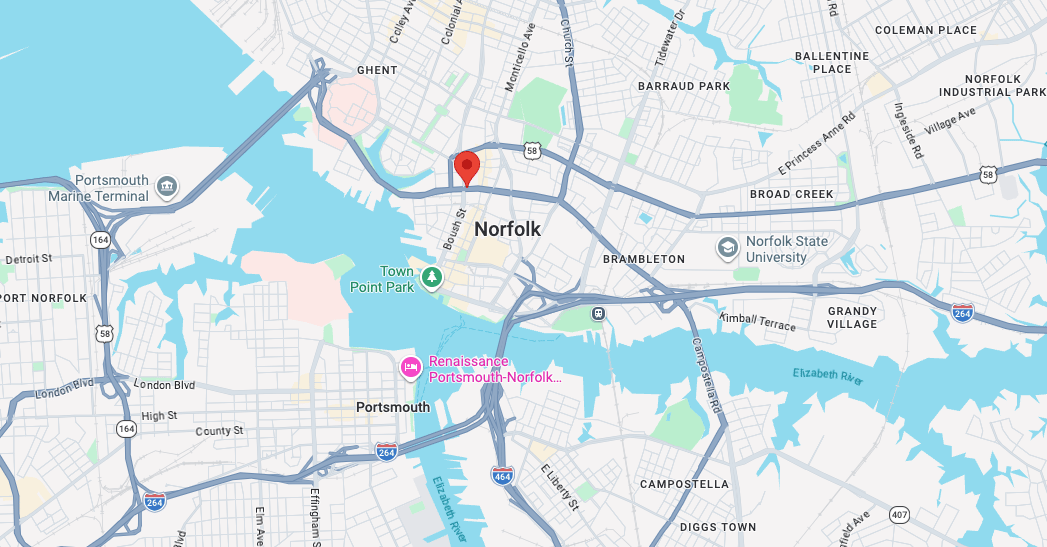
Find us at: 160 W Brambleton Ave. Norfolk, VA 23510
Call or text: 757-777-7777
Email: [email protected]
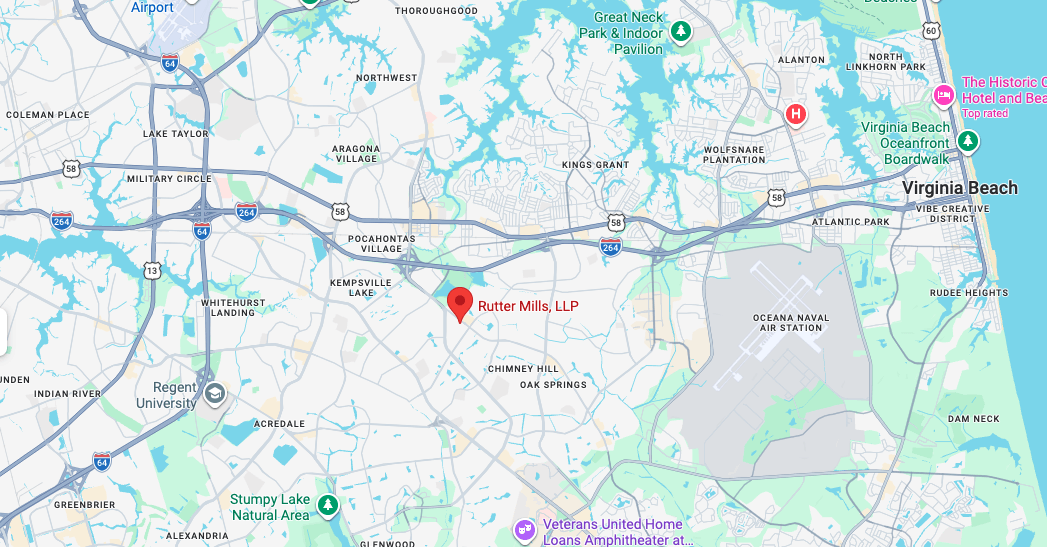
Find us at: 4287 Holland Rd. Virginia Beach, VA 23452
Call or text: 757-777-7777
Email: [email protected]
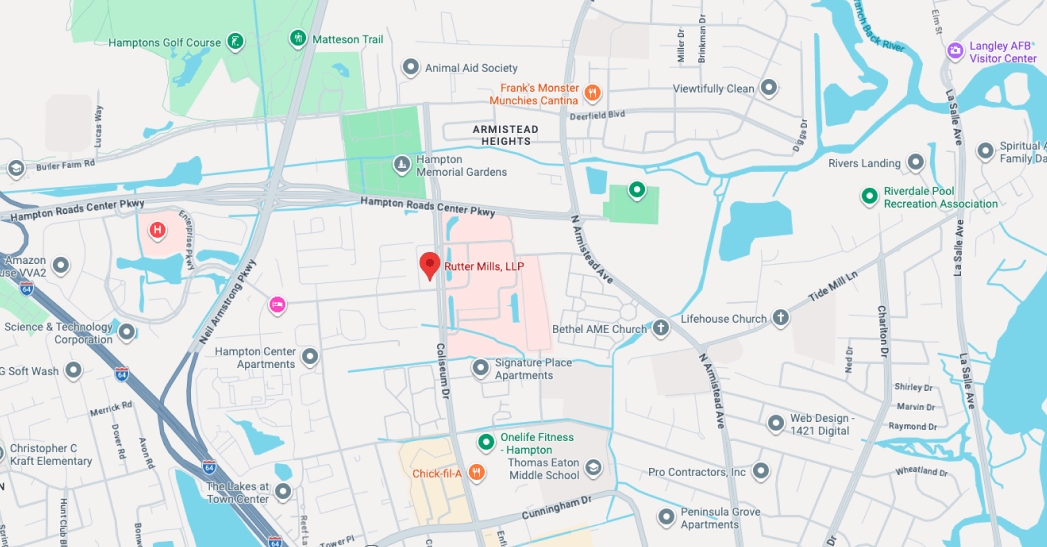
Find us at: 3001 Coliseum Dr, Hampton, VA 23666, United States
Call or text: 757-777-7777
Email: [email protected]
Coming in 2027
Find us at: 740 Eden Way, Chesapeake, VA 23320
Call or text: 757-777-7777
Email: [email protected]