
North Carolina Car Accident Lawyers
A car crash can turn your life upside down in seconds. You may be hurting, missing work, and fielding calls from an insurance adjuster before you’ve had a chance to catch your breath. You don’t have to sort it out alone. A North Carolina car accident lawyer at Rutter Mills deals with the insurance company, gathers the evidence, and tracks every deadline, so you can focus on getting better.
Call 757-777-7777Key Things To Know
- Under North Carolina’s contributory negligence rule, you may not be able to recover money if your own actions helped cause your injuries. The other side has to prove it though, and two exceptions can keep your claim alive.
- You usually have three years from the crash to file an injury lawsuit and two years from the date of death to file a wrongful death claim. Crashes with government drivers have earlier steps.
- Policies issued or renewed on or after July 1, 2025, must carry at least $50,000 per person, $100,000 per accident, and $50,000 for property damage, plus uninsured and underinsured motorist coverage.
Fighting for Your Recovery Since 1959
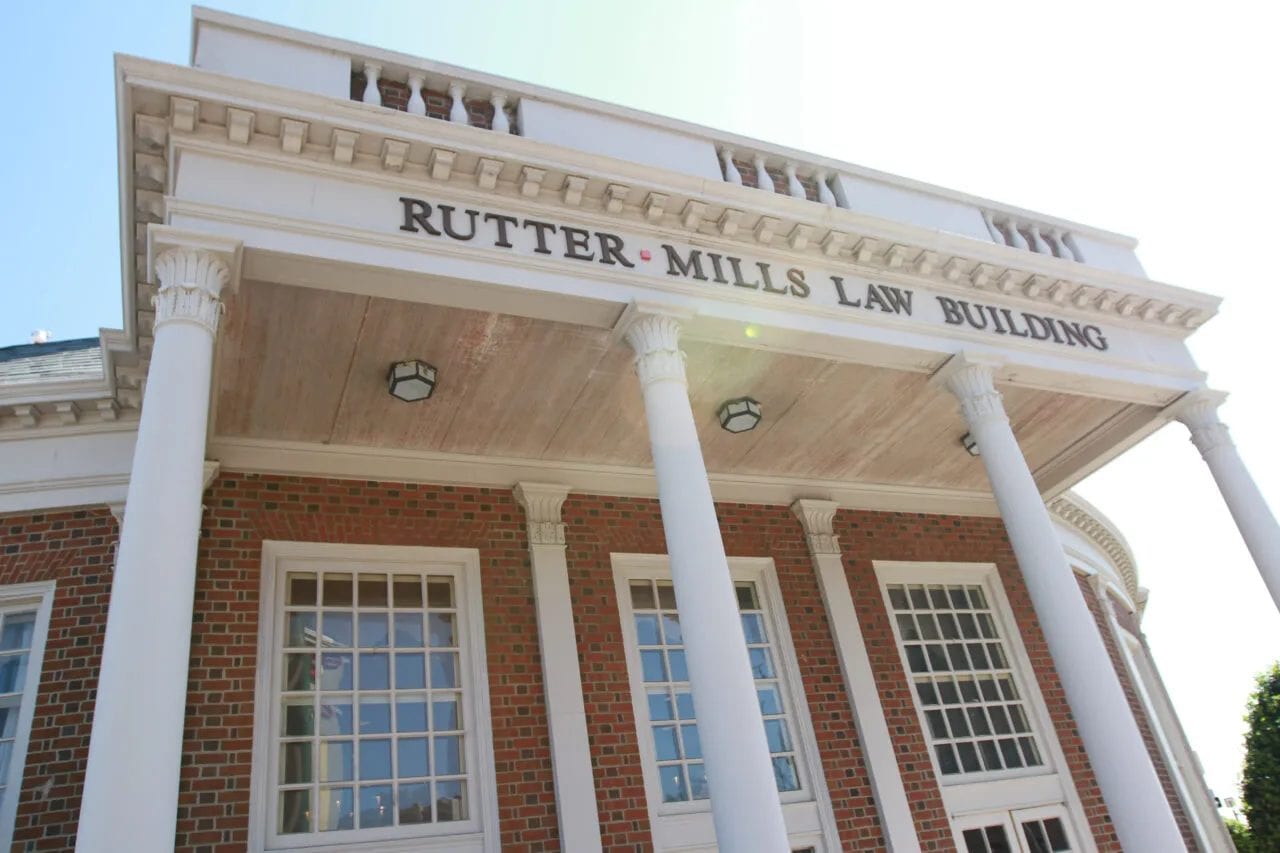
Rutter Mills has fought for injured people since 1959, and our attorneys licensed in North Carolina serve families across northeastern North Carolina from our Hampton Roads offices in Norfolk, Virginia Beach, Hampton, and Chesapeake. You get the resources of an established firm with the personal attention of a team that knows your name. We can meet by phone or video, or come to your home or hospital room if your injuries keep you from traveling. Several of our attorneys once worked for insurance companies, so they know how adjusters size up a claim and where they look for reasons to pay less.
Your first consultation is free. We handle North Carolina car accident claims on a contingency fee, so our fee comes only from what we recover for you, and if there is no recovery, you owe no attorney fee and do not repay the case costs we advanced. Call or text (757) 777-7777 or contact us to talk about your crash.
“When you’ve been hurt, the last thing you need is an insurance company telling you the crash was your fault. North Carolina’s fault rule is strict, but we know how to handle it to support your recovery. We start building your case the day you sign with us,” says C. Arthur “Brother” Rutter III, Managing Partner.
How Does a Car Accident Claim Work in North Carolina?
In North Carolina, the driver who caused the crash is responsible for your losses. You bring a negligence claim (a claim that the other driver was careless) against that driver, and the other side can answer that you were careless too. Under G.S. 20-279.21, every North Carolina owner’s policy must carry liability coverage for injuries and property damage the insured driver causes to others, so your claim usually starts with the at-fault driver’s insurance company. If that driver has no insurance or not enough, your own uninsured or underinsured motorist coverage can pay. Every auto policy in the state must include both, except policies that cover only commercial or fleet vehicles.
Many NC car accident claims settle through negotiation with the insurance company. When an insurer won’t meet us with a fair settlement, we don’t back down – we file a personal injury lawsuit and keep pushing. North Carolina’s statute of limitations, usually three years, controls how long you have to do that, so don’t delay in getting your case started with us.
What Is North Carolina’s Pure Contributory Negligence Rule?
Contributory negligence is North Carolina’s fault rule: if your own carelessness helped cause your injuries, you may not be able to recover money from the other driver, even if that driver was mostly to blame. North Carolina, is one of very few states that still follow this rule.
But courts don’t apply it automatically. Under G.S. 1-139, the other driver (usually through a lawyer that their insurance company hires) has to prove that you were careless and that your carelessness helped cause your injuries. A jury usually decides whether you were careless. Even if you were, two exceptions can still save your claim: last clear chance and gross negligence.
Exceptions to Contributory Negligence in North Carolina
North Carolina recognizes two exceptions to contributory negligence: last clear chance and gross negligence. Either one can let you recover even if you made a mistake.
Last clear chance. This exception applies when you were in danger you couldn’t get yourself out of, and the other driver saw it, or would have seen it by paying reasonable attention, in time to avoid hitting you but didn’t. You have to raise this exception and prove it. It doesn’t apply if you could have gotten out of danger on your own and chose to take the risk. When the evidence supports last clear chance, the judge must explain it to the jury, and leaving it out is grounds for a new trial.
Gross negligence. Gross negligence is reckless behavior, not just an ordinary mistake. If the other driver’s gross negligence, or willful or wanton conduct (deliberately or recklessly ignoring other people’s safety), was a direct cause of your injuries, your own carelessness won’t bar your claim. The North Carolina Supreme Court describes gross negligence as acting with conscious or reckless disregard for the rights and safety of others. That makes it a different kind of conduct from ordinary carelessness, not a bigger version of it. In car crash cases, courts have found gross negligence when the driver was drunk, driving far over the speed limit, or racing. Those are examples, not a complete list.
If You Were Hit as a Pedestrian
If you were hit while walking in North Carolina and you didn’t yield the right of way, that counts as evidence you were careless, but it doesn’t automatically bar your claim. Only very clear facts can make it contributory negligence on their own.
If You Weren’t Wearing a Seat Belt
Under G.S. 20-135.2A, if you weren’t wearing a seat belt, the insurance company can’t use that against you in a North Carolina civil trial. The only exceptions are a case about the seat belt law itself and evidence offered to justify a traffic stop.
If you were hurt, talk to us before you decide you don’t have a case. Call or text (757) 777-7777 or contact us.
How Rutter Mills Protects Your Case When You’re Blamed for the Crash
In one Virginia car accident case, the defense argued contributory negligence based on where our client’s car was parked, and the jury returned a verdict for our client (2019 jury verdict). Being blamed for the crash, or even thinking you were partly at fault, doesn’t necessarily bar your recovery.
An adjuster may ask you for a recorded statement early, before you’ve seen the police report or talked with a lawyer. In our cases, adjusters use recorded statements to ask how fast you were going, when you first saw the other car, whether you looked at your phone, and whether you could have stopped or swerved. Each answer can turn into a contributory negligence argument later. To answer those arguments, we look for the vehicles’ event data recorders (the “black box” that records speed and braking), scene and damage photos, nearby business and doorbell video, signal timing for the intersection, witness statements, and the other driver’s phone records.
“When I worked for an insurance company, the recorded statement was where we looked for a reason to blame the injured driver. Now I tell every client the same thing: call us first, and we’ll guide you through that conversation,” says Andrew Boran, Personal Injury Attorney.
Ready to Find Out What Your Case Is Worth?
It all starts with a phone call or text message. Free consultation, no commitment, no fee unless we win.
Call 757-777-7777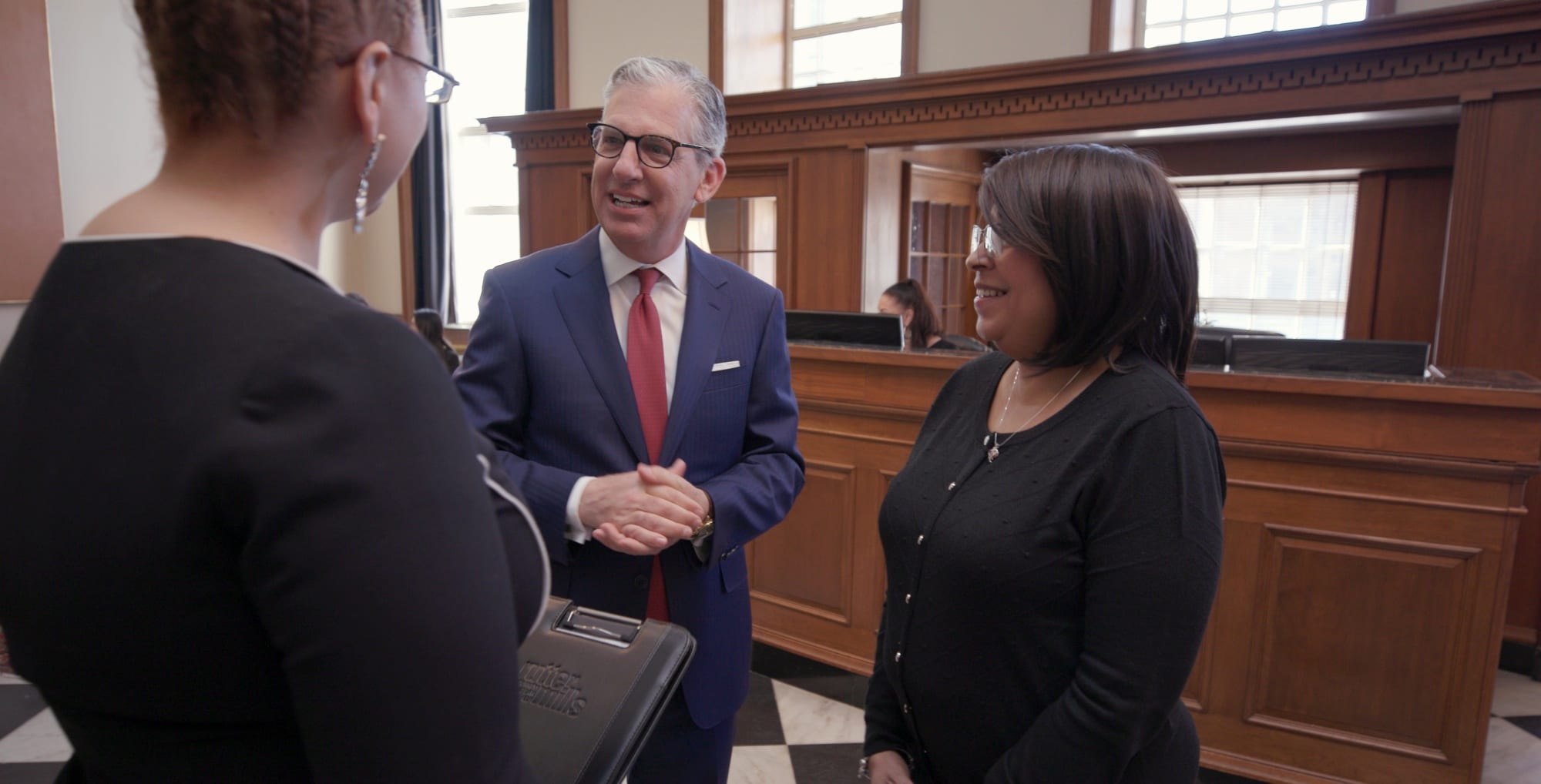
What Should You Do After a Car Crash in North Carolina?
After a car crash in North Carolina, call the police and get medical care right away. If you’re healthy enough, help anyone else who is hurt, document the scene, and exchange information after the police arrive. Be sure to talk with a lawyer before you give the insurance company a recorded statement.
Some of these steps are legal requirements, and you can learn more about them below.
- Stop and help anyone who is hurt. If you know, or reasonably should know, that someone was hurt, G.S. 20-166 requires you to stop right away, give reasonable help (including calling for medical help when it’s clearly needed), and stay until an officer finishes investigating or tells you that you can leave.
- Call the police. In a reportable crash, G.S. 20-166.1 requires the driver to notify law enforcement right away: the city police inside a city or town, and otherwise the State Highway Patrol or the county sheriff’s office. Failing to call the police and file a report can result in the insurance company denying your claim.
- Document the scene and exchange information. If you’re healthy enough, take photographs of the vehicles, the road conditions, and your injuries. Exchange any necessary information with the other driver, such as names and license plate numbers.
- Get a copy of the police report. The investigating officer must write a crash report within 24 hours. If you were in the crash, the NCDMV crash reports page says you can order a redacted copy in person or by mail on Form TR-67A, and you should allow 10 business days for a mailed request. Rutter Mills clients don’t have to handle this step; we request the report for you.
- Get medical care and keep records of your bills. Whether you’re treated in North Carolina or across the line in Virginia, focus on getting well and be sure to document everything. Your medical records connect your injuries to the crash, and your bills show what that care cost. Your Rutter Mills car accident attorney will use this information to help build your claim.
- Talk with a lawyer before you give a recorded statement. Your insurance company might call or attempt to settle quickly. Keep in mind that an insurance adjuster works for the insurance company, and anything you say before you know your rights may be used to argue that you were partly at fault.
In northeastern North Carolina, the evidence we often see disappear first is video from businesses and homes along the road. Many systems have to record over the data due to storage limitations. The damaged car itself can go next: an insurer can total it and send it to a salvage auction with its event data recorder still inside.
That is why it’s so important to speak to a lawyer at Rutter Mills right away. In the first days after a crash, we tell clients to photograph their car, keep it out of the salvage process until we can inspect it, and let us send preservation letters (written requests to save evidence) to anyone who may have video.
How Long Do You Have to File a Car Accident Claim in North Carolina?
In most North Carolina car accident cases, you have three years from the date of the crash to file a personal injury lawsuit under G.S. 1-52. This deadline is called the statute of limitations. If an injury doesn’t show up right away, the clock starts when it becomes apparent, or reasonably should have.
Some claims have shorter deadlines or extra steps first. We list the ones that can come up after a crash in North Carolina below, including claims against state agencies and school boards, because they catch many families by surprise.
| Situation | Deadline or required step | Law |
|---|---|---|
| Injury claim against another driver | 3 years from when your injury became apparent, or reasonably should have | G.S. 1-52(5), (16) |
| Wrongful death claim | 2 years from the date of death | G.S. 1-53(4) |
| Crash with a federal driver (Federal Tort Claims Act) | File a written claim with the federal agency within 2 years. If the agency denies it, you have 6 months from the denial letter to sue | 28 U.S.C. 2401(b) |
| Crash with a state employee (State Tort Claims Act) | File with the North Carolina Industrial Commission within 3 years, or within 2 years of a death for a wrongful death claim | G.S. 143-299 |
| Appealing a State Tort Claims Act decision | Ask the full Industrial Commission to review it within 15 days of receiving the decision | G.S. 143-292 |
| Hit-and-run driver who can’t be identified (uninsured motorist claim) | Report the crash to a police officer, another law enforcement or judicial officer, or the Commissioner of Motor Vehicles within 24 hours, or as soon as you reasonably can | G.S. 20-279.21(b)(3)b. |
| Underage driver who was sold alcohol by a business with an alcohol permit or a local ABC board | 1 year to file the claim against the seller | G.S. 1-54(7a) |
| Crash caused by a defective vehicle or part | No later than 12 years after the product was first bought | G.S. 1-46.1(1) |
| Injured person under 18 or legally incompetent when the claim arose | The usual deadline, counted from when the person turns 18 or the disability ends | G.S. 1-17(a) |
North Carolina also sets an outer limit: unless another law says otherwise, you can’t bring a personal injury lawsuit more than 10 years after the last act or omission that caused your injury. If you were hurt in a crash with a driver or owner who can’t be identified, G.S. 20-279.21 also requires you to notify your uninsured motorist insurer within a reasonable time, and you can’t sue that insurer until 60 days after it first receives your notice. Read more on our hit-and-run page.
Not sure which deadline applies to you? Call or text (757) 777-7777 or contact us to talk about your case.
What Insurance Do North Carolina Drivers Have to Carry?
With limited exceptions, the NC Department of Insurance says North Carolina owner’s policies issued or renewed on or after July 1, 2025, must carry at least $50,000 for injuries to one person, $100,000 for injuries to two or more people in one crash, and $50,000 for property damage. Before that date, the minimums were $30,000, $60,000, and $25,000. Under NCDMV insurance requirements, every vehicle registered in North Carolina must keep continuous liability insurance from a company licensed in the state, and the state doesn’t accept out-of-state policies.
Under G.S. 20-279.21, North Carolina auto policies must also include uninsured motorist (UM) coverage, which pays you when the at-fault driver has no insurance, and underinsured motorist (UIM) coverage, which pays when the at-fault driver’s insurance isn’t enough to cover your losses. The only exception is a policy that covers just commercial or fleet vehicles. Your UM limits match the highest injury liability limits for any one vehicle on your policy, up to $1,000,000 per person and per crash, unless you choose different limits, and they can never fall below the state minimums. Your UIM limits must equal the UM limits you bought.
What If the Other Driver’s Insurance Isn’t Enough?
Your own underinsured motorist (UIM) coverage can pay the difference, up to your UIM limits. For North Carolina policies issued or renewed on or after July 1, 2025, the at-fault vehicle counts as underinsured when all the liability coverage that applies to it adds up to less than your total damages. A vehicle insured under your own policy counts as underinsured only if that policy’s UIM limits are higher than its liability limits. Under these policies, your UIM coverage picks up where the at-fault driver’s coverage ran out, and your insurer can’t reduce it by subtracting other coverage, except workers’ compensation. If you’re covered by more than one policy on personal (nonfleet) vehicles, you can add together the UIM limits from each one.
Under North Carolina law, if you give your UIM insurer written notice of a settlement offer from the at-fault driver’s insurer, and your UIM insurer doesn’t pay you the same amount within 30 days, it loses the right to approve the settlement and loses its right to go after the at-fault driver to be paid back. Our uninsured motorist page covers these claims in more detail.
What Compensation Can You Recover After a North Carolina Car Accident?
In a North Carolina car accident claim, you can seek compensation for medical expenses, lost earnings, pain and suffering, scars or disfigurement, the partial or total loss of use of part of your body, and permanent injury (N.C.P.I. Civil 810.02), along with the damage to your vehicle. We fight for maximum compensation, which starts with counting every loss, including care you’ll still need.
Medical Bills and Medical Liens
You can recover the cost of the medical care the crash made necessary, including care you’ll need in the future. In a North Carolina case, G.S. 8C-1, Rule 414 limits the evidence of your past medical bills to two amounts: what was actually paid on the bills that have been paid, no matter who paid them, and what it will actually take to pay the bills that are still open.
The hospitals, doctors, ambulance services, pharmacies, and medical suppliers who treated you can place a lien on your recovery, meaning they’re entitled to be paid from it, whether you win in court or settle. Under G.S. 44-49, a provider’s lien counts only if, when your attorney asks, the provider sends an itemized bill or your records, free of charge, along with written notice of the lien, within 60 days. Under G.S. 44-50, liens can never take more than 50% of what you recover after attorney fees. We include these rules because liens often decide how much of a settlement actually reaches you.
Vehicle Damage
You can also recover the damage to your vehicle. If the insurer admits fault but you disagree on how much value your car lost, North Carolina law may let you settle it through an appraisal instead of going to court.
Punitive Damages in North Carolina
Punitive damages are extra money meant to punish a driver for especially bad conduct. They’re separate from compensatory damages, which repay your actual losses, like medical bills and lost pay.
Under G.S. 1D-15, you have to show that the driver committed fraud, acted with malice (personal ill will toward you), or knowingly ignored other people’s safety. The law calls that last one “willful or wanton conduct,” and it’s the one that usually comes up in car crash cases. It’s a higher bar than gross negligence, the reckless driving that can get you past North Carolina’s contributory negligence rule.
You also need stronger proof than for the rest of your claim. The law calls it “clear and convincing evidence.” That means the jury must be firmly convinced, not just persuaded that something is more likely true than not.
North Carolina limits punitive damages to three times your compensatory damages or $250,000, whichever is more. However, this limit doesn’t apply when the other driver was drunk or impaired.
If the other driver was working for a company at the time of your car accident, the company doesn’t automatically owe punitive damages just because it employed the driver. It owes them only if its officers, directors, or managers took part in or approved the wrongful behavior.
When a Car Accident Takes a Life
If a car crash in North Carolina took the life of someone you love, the personal representative of their estate files the claim under G.S. 28A-18-2. The personal representative is the person who handles the estate, usually the executor named in a will or someone the court appoints. Your family can recover medical and hospital costs, your loved one’s pain and suffering, reasonable funeral costs, the income, services, care, and companionship your family lost, and punitive damages when the law allows them.
Under G.S. 28A-18-2(a), money from a wrongful death claim generally goes to your family, not to your loved one’s creditors. There are two exceptions. Burial costs can be paid from it. So can up to $4,500 in hospital and medical bills from the fatal injury, but those bills can’t take more than half of what’s left after attorney fees.
G.S. 1-53 gives you two years from the date of death to file. Learn more on our wrongful death page and our fatal car accident page.
What If the Other Driver Was Drunk or Distracted?
Impaired driving can change a North Carolina claim in two ways. It can show gross negligence, which defeats a contributory negligence defense. And under G.S. 1D-26, when the driver’s conduct would support an impaired driving charge, the cap on punitive damages doesn’t apply, though you still have to prove willful or wanton conduct or another aggravating factor.
Under G.S. 18B-121, if a North Carolina business with an alcohol permit, or a local ABC board (the agency that runs a city or county’s ABC stores), carelessly sold or served alcohol to an underage driver who then caused your crash while impaired, you may have a separate claim against the seller. Some limited permit holders are exempt. Proof that the seller sold to an underage person without checking ID counts as evidence that the sale was careless. Under G.S. 18B-123 and 18B-124, you can collect the full amount from either the seller or the driver (or the vehicle owner), and total damages for everyone hurt are capped at $500,000 per incident. G.S. 1-54(7a) gives you one year to file. See our drunk driving accident page.
Distracted driving is common: according to NCDOT’s 2024 Traffic Crash Facts, drivers reported being distracted in 17% of crashes statewide in 2024. Phone records, vehicle data, and witness statements can show that a driver was distracted, and North Carolina bans texting while driving under G.S. 20-137.4A. Read about distracted driving and texting while driving claims.
What If a Government or Military Driver Hit You?
A crash with a government driver follows different rules, depending on which government employed the driver. We cover each one because northeastern North Carolina has state, county, city, school, and federal vehicles on the same roads, and each has its own path.
Accidents with a North Carolina State Employee
If a North Carolina state employee hit you while driving for work, you can’t sue in a regular court. Under the State Tort Claims Act, your claim goes to the North Carolina Industrial Commission, a state agency that decides these cases instead of a judge.
You start the claim with an affidavit, a written statement you swear is true. It must include:
- Your name
- The state agency and the employee involved
- The amount of money you’re asking for
- When and where you were hurt
- A short description of what happened
The State pays at most $1,000,000 in total for injuries to any one person from a single crash, and that amount is reduced by any commercial insurance the State has (G.S. 143-299.2). North Carolina’s contributory negligence rule still applies, but the State would have to prove you were at fault.
Accidents with a School Bus
Claims against county and city boards of education for crashes involving public school buses or school transportation vehicles also go to the Industrial Commission, not a regular court, when the conditions in G.S. 143-300.1(a) are met.
Crashes Involving a City Vehicle
If a city driver hits you, and the city has liability insurance, you can usually recover damages through their insurance policy.
North Carolina cities are often protected from lawsuits. This protection is called governmental immunity. Under G.S. 160A-485, a city gives up that protection when it buys liability insurance, but only up to the amount of that insurance. You still have to meet any deadlines to tell the city about your claim in writing and to file your lawsuit.
Crashes with a County Vehicle
Under G.S. 153A-435, a North Carolina county that buys liability insurance gives up its immunity, up to that coverage limit, for claims arising from its government work.
Accidents with Federal or Military Drivers
You can’t sue the United States right away. First, 28 U.S.C. § 2401(b) requires you to file a written claim with the right federal agency within two years after the claim arises. Under 28 U.S.C. § 2675, you can sue only after the agency denies your claim in writing by certified or registered mail. If the agency hasn’t decided within six months, you can choose to treat its silence as a denial and start a lawsuit at that time. After a written denial or failure to decide, you have six months to file your lawsuit. Your lawsuit generally can’t ask for more than your claim did, unless you find new evidence you couldn’t reasonably have found earlier, or new facts come up that affect the amount.
These federal rules matter in northeastern North Carolina, where federal and military vehicles from the U.S. Coast Guard Base Elizabeth City share the roads.
When the other driver was a federal employee or servicemember, our Rutter Mills car accident lawyers have seen people give a recorded statement to the driver’s personal insurer or wait months on a claim that belonged with a federal agency all along. When you hire our experienced legal team, one of the first things we check is whether the driver was on duty at the time of the crash. Your timely recovery means everything to us.
How Can a North Carolina Car Accident Lawyer at Rutter Mills Help?
From the moment you hire our legal team, we take over your claim so you aren’t negotiating alone with the insurance company. We gather the police report and your medical records and locate every policy that could be used in your recovery, including your own UM and UIM coverage. We build a case that prevents the defense’s contributory negligence arguments with evidence, and everything gets filed before any deadlines hit. If a settlement offer doesn’t cover what the crash has cost you, we’re ready to file a personal injury lawsuit and take your case to trial in North Carolina court.
We handle car accident claims including rear-end collisions, head-on collisions, side-impact crashes, truck accidents, and motorcycle accidents. Accidents like these often cause severe injuries, including traumatic brain injuries, spinal cord injuries, broken bones, and neck injuries such as whiplash. Our North Carolina personal injury lawyers also handle many other injury claims across northeastern North Carolina, so you can work with the same personal injury law firm if your case involves more than one claim.
Rutter Mills Helps Car Accident Victims in Northeastern North Carolina
We help people hurt in car crashes across northeastern North Carolina, including Elizabeth City, Moyock, Camden County, Gates County, Hertford County, Bertie County, and the Outer Banks communities of Nags Head, Kill Devil Hills, Manteo, and the rest of Dare County. According to the NC Judicial Branch, North Carolina Judicial District 1 covers Camden, Chowan, Currituck, Dare, Gates, Pasquotank, and Perquimans counties.
What If an Out-of-State Driver Hit You in the Outer Banks?
According to NCDOT’s 2024 Traffic Crash Facts, out-of-state drivers were involved in 11% of all North Carolina crashes in 2024 and accounted for 7% of drivers killed. When a visitor causes a crash on the Outer Banks, North Carolina law decides the claim, because North Carolina courts apply the law of the state where the injury happened. Even after an out-of-state driver goes home, G.S. 1-105 lets you serve your lawsuit through the North Carolina Commissioner of Motor Vehicles, because the law treats any driver from another state who drives here as having agreed to that.
Do North Carolina Traffic Laws Apply on Currituck’s 4×4 Beach?
Yes. Under G.S. 20-4.01(32), North Carolina treats a beach that the public drives on as a “public vehicular area,” so the state’s traffic laws apply there. According to Currituck County’s beach driving rules, on the county’s 4×4 beach north of Corolla, the speed limit is 35 mph and drops to 15 mph within 300 feet of any person. Their website also states that the whole beach becomes driving lanes after dark, and drivers knowingly share the sand with pedestrians, horses, and other wildlife.
What If You Live in Virginia, But Experienced a Car Crash in North Carolina?
If you live in Virginia and were hurt in a North Carolina accident, North Carolina law decides fault due to the location of the accident. However, your own Virginia auto policy, including its UM and UIM coverage, is usually read under Virginia law. That’s because North Carolina courts interpret an insurance policy under the law of the state where it was issued.
Some of our clients from Currituck County and the northern Outer Banks are treated at hospitals in Chesapeake and Norfolk, which means their medical records and bills come from Virginia providers as well as North Carolina ones. Our legal team is experienced across both states. For your protection, we always request records from each provider and check every lien claimed against your recovery before your case settles.
Results from Rutter Mills Car Accident Cases
These results come from our Virginia car accident cases, where the same strict contributory negligence rule applies.
- $4.85 million settlement for a woman seriously injured in a T-bone collision (2026).
- $4.125 million settlement for a man left unable to work, with more than $1 million in medical bills, after a devastating auto accident. Virginia Lawyers Weekly recognized it as the top personal injury settlement in Virginia for 2015.
- $1 million jury verdict for a driver stopped on the roadside with a flat tire when a commercial vehicle hit his car (2019). The defense argued contributory negligence based on where his car was parked, and the jury found for our client.
Past results don’t guarantee a similar outcome. Every case is different.
Your lawyer matters. Read what our clients say in our reviews, and call or text (757) 777-7777 or contact us when you’re ready to talk about your accident. We’ll guide you every step of the way.
This page gives general information about North Carolina law. It is not legal advice for your situation, and reading it does not create an attorney-client relationship.
North Carolina Reviews
See what our clients say about Rutter Mills.


Over 1,500 5-Star Reviews

Mr. Daniel Delalla, he has helped me tremendously! I had to go to court for my case and he did an Extraordinary job in getting back an acceptable compensation amount. He fought hard for me in court and worked diligently on negotiations with insurance company. Thank you Mr. DeLalla you are greatly appreciated.
Dont make it harder than it needs to be. Choose Rutter Mills! I had never needed to contact an attorney, it was all new to me and I was in pain from being rear ended while at a stop light. I did like most and checked reviews. I called Rutter Mills and not for one second did I ever doubt my decision. I had the pleasure of working with attorney Andrew Boran and his paralegal Kathy Saunders. They were there for me every step of the way. Extremely understanding and knowledgeable. They stayed in touch with me and went to bat for me. I highly recommend them to anyone. Don't make it harder than it needs to be on yourself, CALL RUTTER MILLS NOW!
After the car accident I didn't know where to turn. The insurance companies were no help and the bills were piling up. I called Rutter Mills and they were so nice and considerate on the phone. They helped me with my settlement and actually got me more money than expected.


Frequently Asked Questions
No. North Carolina is an at-fault state, and North Carolina auto policies don’t typically include personal injury protection (PIP) coverage, the type of insurance that pays your own medical bills no matter who caused the crash (G.S. 20-279.21). Under the pure contributory negligence rule, you may not be able to recover if your own carelessness helped cause your injuries, but the other side has to prove it, and certain exceptions can keep your claim alive.
Under North Carolina’s pure contributory negligence rule, if your own carelessness helped cause your injuries, you may not be able to recover, even if the other driver was mostly to blame. But the other side has to prove it, and the decision is often brought to a jury. There are also exceptions to this rule.
Thinking you were partly at fault doesn’t necessarily bar your recovery, so talk with an auto accident lawyer before you decide you don’t have a case.
No. Under G.S. 20-135.2A, evidence that you weren’t wearing a seat belt can’t be used in any North Carolina civil trial or proceeding, so it can’t be put in front of a jury to reduce your claim.
Your own underinsured motorist (UIM) coverage can pay, up to your UIM limits. Under G.S. 20-279.21, every North Carolina auto policy must include UIM coverage, except commercial or fleet-only policies. Under policies issued or renewed on or after July 1, 2025, a vehicle is underinsured when its liability limits fall short of your total damages, and your UIM coverage picks up where the at-fault driver’s coverage ran out.
You have two years from the date of death to file a wrongful death claim for your loved one under G.S. 1-53. If a state employee caused the crash, you must file with the Industrial Commission within two years after the death. For a crash with a federal driver, you must file a written claim with the federal agency within two years, and if it’s denied, you have six months from the denial letter to sue.
It’s always smart to speak with one. Some injuries take a while to show up, so you don’t want to make decisions too quickly. In certain situations where no one was hurt and the insurance company is paying to fix your car, you may be able to handle the claim yourself.
We recommend talking with a personal injury lawyer when anyone was injured, when the insurer questions who caused the crash, or when the crash involved a death, a hit-and-run driver, or a government vehicle. The consultation is free, so it costs nothing to find out where you stand.
At Rutter Mills, nothing up front. Your first consultation is free, and we handle North Carolina car accident claims on a contingency fee, so our fee comes only from what we recover for you. If there is no recovery, you owe no attorney fee and do not repay the case costs we advanced.
Yes, if it’s a reportable crash. Under G.S. 20-166.1, the driver must notify law enforcement right away. Under G.S. 20-4.01(33b), a crash is reportable if it causes a death, an injury, or total property damage of $1,000 or more.
Talk with a lawyer before you give the other driver’s insurer a recorded statement. The adjuster works for the insurance company, and because of North Carolina’s contributory negligence rule, one answer suggesting you were partly at fault can be used to deny your claim.
There’s no standard amount. The value depends on your medical bills and future care, lost income, pain and suffering, any permanent injury, and how much insurance is available, including your own UIM coverage. Contributory negligence arguments can also affect value, which is why evidence of fault matters. We can give you a realistic view after reviewing your records in a free consultation.
You’ve Been Through Enough. Let Us Handle What Comes Next.
You don’t have to figure this out alone. Call or text 757-777-7777 for a free consultation. No commitment. No upfront cost. No fee unless we win.
Wherever You Are in Hampton Roads, There’s a Rutter Mills Office Near You.
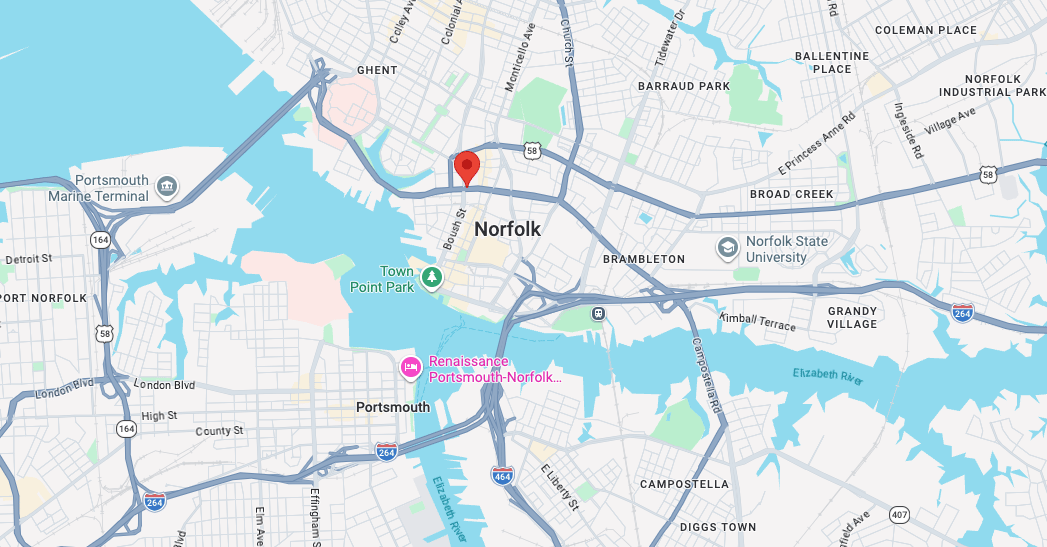
Find us at: 160 W Brambleton Ave. Norfolk, VA 23510
Call or text: 757-777-7777
Email: [email protected]
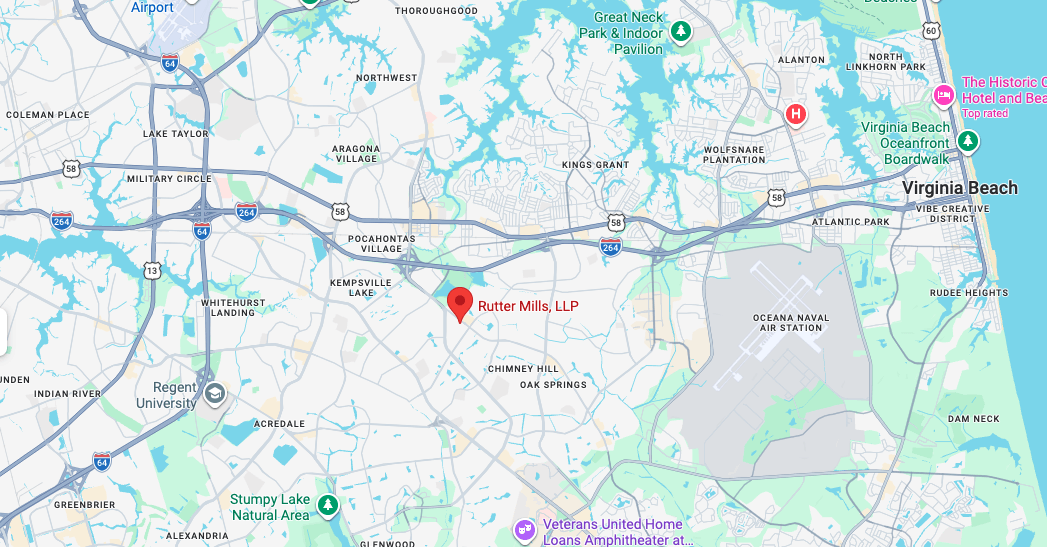
Find us at: 4287 Holland Rd. Virginia Beach, VA 23452
Call or text: 757-777-7777
Email: [email protected]
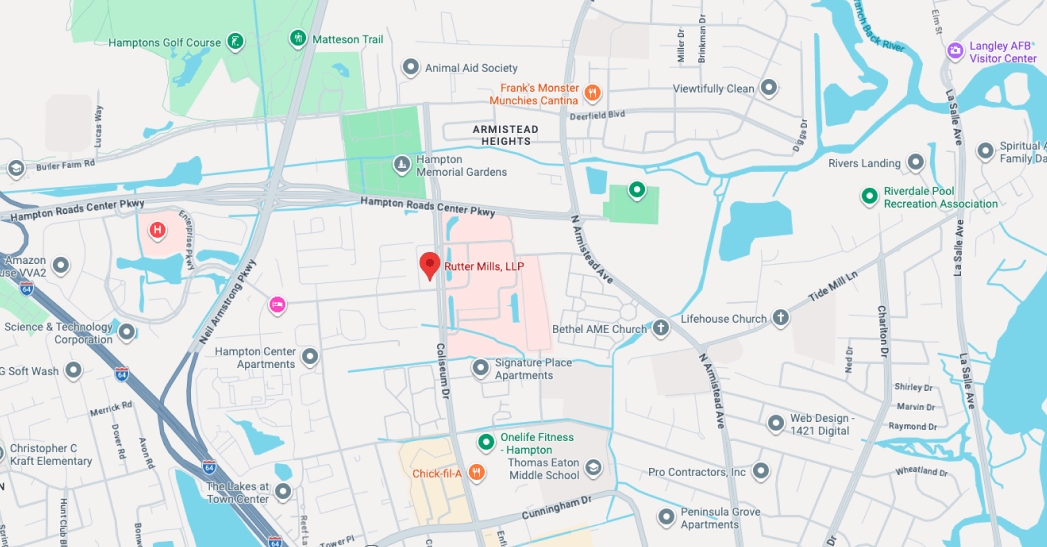
Find us at: 3001 Coliseum Dr, Hampton, VA 23666, United States
Call or text: 757-777-7777
Email: [email protected]
Coming in 2027
Find us at: 740 Eden Way, Chesapeake, VA 23320
Call or text: 757-777-7777
Email: [email protected]