

Insurance Companies Are Paying Fewer Claims: What Virginia Drivers Need to Know
Posted on September 8, 2026

In recent years, a number of new driving regulations have been made an official part of Virginia law. Drivers across the state should be aware of these new driving laws, along with changes to critical Virginia traffic laws that have come into effect over the last several years.
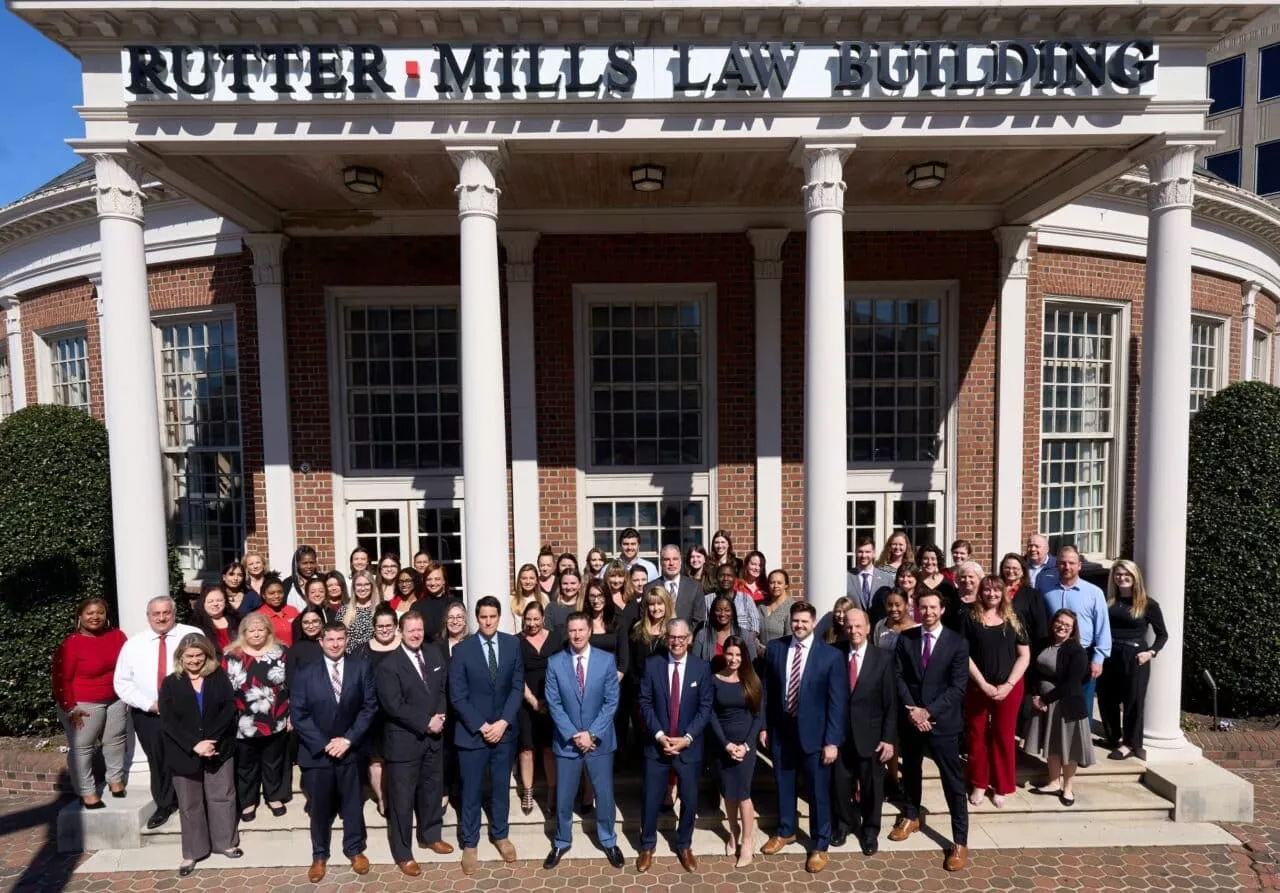
For expert legal guidance regarding Virginia driving laws, you can count on the skilled car accident lawyers of Rutter Mills. For over 65 years, families located in Virginia Beach and all across Hampton Roads have depended on our knowledgeable legal team for compassionate advocacy and results-focused representation.
There are several driving laws being implemented across the commonwealth in 2026, including:
HB 1479 went into effect on July 1, 2026.
It states that the court can award punitive damages to plaintiffs in hit-and-run crashes.
This move is designed to deter reckless drivers and prevent those who do cause crashes from leaving the scene.
These damages may be assessed in addition to compensatory damages for medical bills, pain and suffering, and other expenses.
Virginia is the first state in the nation (as of July 1, 2026) to implement the Intelligent Speed Assistance (ISA) program to tamp down on reckless driving, exhibition driving, and speed-related traffic infractions. The ISA allows speed-limiting technology to be installed in the vehicles of convicted reckless drivers. The device uses GPS and mapping technology to monitor speed limits in real time and stop cars from exceeding those limits.
The 9-month program may be offered as an alternative to drivers facing a license suspension. Drivers caught tampering with the device or driving without one when required will be subject to subject to fines or court action.
Three updates in 2026 will shift the way administrative tasks are handled by the Virginia Department of Motor Vehicles and county clerks.
First, vehicles subject to safety inspections will have new stickers: blue to indicate passing and white to indicate failing (replacing the previous pink stickers). The new white stickers will have additional adhesive and will be scraped off if re-inspection passes.
Second, a new law allows individuals to request itemized records from the clerk of courts for traffic fines and payments.
Third, Virginia also expanded the use of digital driver’s licenses, which may be eligible for use at the TSA.
Over the past few years, other traffic laws have been instituted or updated to keep VA drivers safe. Here’s what you need to know:
Virginia has had notably lax seat belt laws for years and a below-average usage rate. Previously, only passengers in the front seats of a vehicle were required to wear seat belts. Now, every person over the age of 18 must wear a safety belt whether they’re sitting in the front or back of the vehicle.
This is a secondary traffic law, so it can only be enforced if a vehicle is pulled over for another infraction. Fines start at $25. The law was lobbied for by the family of Christopher King, a Virginia teen who was killed in a 2020 crash.
Motorists who knowingly allow an unlicensed driver or a driver in violation of their learner’s permit behind the wheel may now face criminal charges if the unauthorized driver causes a crash resulting in injury or death. Under Virginia Code § 46.2-301.1, the responsible party can be charged with a criminal misdemeanor.
Before recent updates to Virginia law, failing to stop for a pedestrian was considered a minor traffic infraction. Now, if a pedestrian is lawfully crossing and suffers serious bodily injury or death because a driver failed to yield, the driver may be charged with a Class 1 misdemeanor under Virginia Code § 46.2-924.
Exhibition driving includes burnouts, donuts, and driving in a zigzag pattern near two or more people. Under Virginia Code § 46.2-865, exhibition driving is now classified as reckless driving. A conviction can result in a license suspension of up to six months.
Under a 2025 update to Virginia Code § 18.2-271.1, DUI offenders who voluntarily install an ignition interlock and enroll in a VASAP class before trial may now count that time toward the 12-month interlock requirement imposed after conviction. Before this change, pre-trial installation earned no credit toward post-conviction requirements.
Under Virginia Code § 46.2-301, a court may dismiss charges against a driver operating a vehicle with a suspended or invalid license, provided the driver proves they have corrected the issue before their court date and has no prior violations of this section within the past 10 years.
Under a 2025 Virginia law, photographs or video produced by a school zone speed camera must show that the school zone sign was active or in position at the time of the alleged violation in order to serve as prima facie evidence. Drivers cited during periods when the school zone was not active may have grounds to contest the citation.
Virginia Statute §46.2-818.2 created a total ban on holding mobile devices when driving, with the exception of motorists who are lawfully stopped and parked, or reporting an emergency.
Virginia Statute 46.5-810.1 expands on previous legislation that made it unlawful to smoke in a motor vehicle in the presence of minors under the age of 15.
All vehicle drivers must stop when yielding to pedestrians at marked crosswalks, lateral boundary lines of adjacent sidewalks, and any intersection where the maximum speed limit is no more than 35 mph.
Speeders can be found guilty of per se reckless driving for driving more than 20 miles per hour above the posted speed limit, or driving in excess of 85 miles per hour regardless of the speed limit. This raises the threshold for per se reckless driving from the previous 80 miles per hour.
Virginia Statute § 18.2-268.3 allows a person convicted of a first offense of refusal of breathalyzer or blood tests to determine BAC to petition the court for a restricted driver’s license. The restricted license is not applicable to commercial motor vehicles.
The Virginia Department of Motor Vehicles must return or reinstate any person’s driver’s license that was suspended prior to July 1, 2019, solely for nonpayment of fines or costs. Any person who is convicted of violating the law cannot have their driver’s license suspended just because they are unable to or refuse to pay fines and costs.
A person’s driver’s license cannot be suspended based on a deferred disposition for a drug offense, non-payment of certain fees owed to a regional jail or correctional facility, or for shoplifting motor fuel.
Children in Virginia must remain in rear-facing car seats until the age of 2 or the minimum weight limit called for by the car seat manufacturer. If your car does not have a back seat, the child may sit in the front passenger seat but only when the passenger seat airbag is deactivated.
Holding a cell phone while driving in a Virginia road work zone is against the law. Violators will face a $250 fine.
Failing to move over or slow down for police, fire, EMS and similar vehicles stopped with flashing lights will now be reckless driving, similar to speeding over 85 mph. Penalties for reckless driving in Virginia include up to a year in jail or a fine up to $2,500.
Dooring occurs when a motorist opens a vehicle’s door in the path of an oncoming vehicle or cyclist. The impact can seriously injure a bicyclist.
If you are in a car accident in Virginia, immediately afterward, you should check for injuries, call 911, and stay at the scene (a safe distance from the wreckage and out of the way of traffic). Exchange insurance information and contact details with any other drivers, take photos with your phone to document the scene, and seek medical attention, even if you feel fine.
Before you speak to your insurance company or the other driver’s, contact an attorney experienced in traffic law.
Virginia is an at-fault state, meaning the responsible driver is liable for damages. Virginia also follows contributory negligence, which is one of the strictest standards in the country.
If you are found even partially at fault, you may be barred from recovering compensation entirely. This makes having an experienced attorney on your side especially important.
According to Virginia Statute § 8.01-243, the statute of limitations gives most people injured in a car accident two years from the date of the accident to file a personal injury lawsuit. Miss that deadline and you generally lose the right to pursue compensation, regardless of how strong your case is. If the accident involved a government vehicle or entity, the window to act can be even shorter.
However, statutes of limitations can be more complicated than they appear. Multiple deadlines may apply to your case, and certain circumstances can affect them. A personal injury attorney can help you understand exactly where you stand.
Learn more about how Virginia’s statute of limitations works in practice.
Carter Rutter is a third generation personal injury attorney at Rutter Mills who brings a thoughtful, client-focused approach to personal injury advocacy, rooted in a strong connection to the Hampton Roads community. He is an integral part of the firm’s continued growth and leadership. In addition to representing injured clients, Carter plays an influential role in the firm’s operations and marketing efforts, helping guide Rutter Mills’ expansion while ensuring the firm’s longstanding reputation for trust, service, and results remains at the forefront.
A Rutter Mills case is a serious case. It may mean you have been badly injured. It certainly means you have a lot on the line, and the resolution of your case will make a big difference to you, your family, and your life moving forward.
Contact Us for a Free Case Evaluation
Our team is ready to listen day or night – 7 days a week, so contact us now to see how we can help you on the road to recovery.